Eating well as a woman: iron, calcium and folic acid at every age
Women in Bangladesh often eat last and least. A few small changes to an everyday plate of rice, dal and fish cover what a woman’s body needs most, from the teenage years to after menopause.
Written by: Siratul Jannat (BMDC A-109809) · Medically reviewed by: Siratul Jannat (BMDC A-109809)
In many homes, mothers and sisters feed everyone else first and eat whatever is left. Yet periods, pregnancy and breastfeeding mean a woman’s body needs more of some things, not less. Nothing expensive is needed: everyday food has the answer.
What your plate should look like
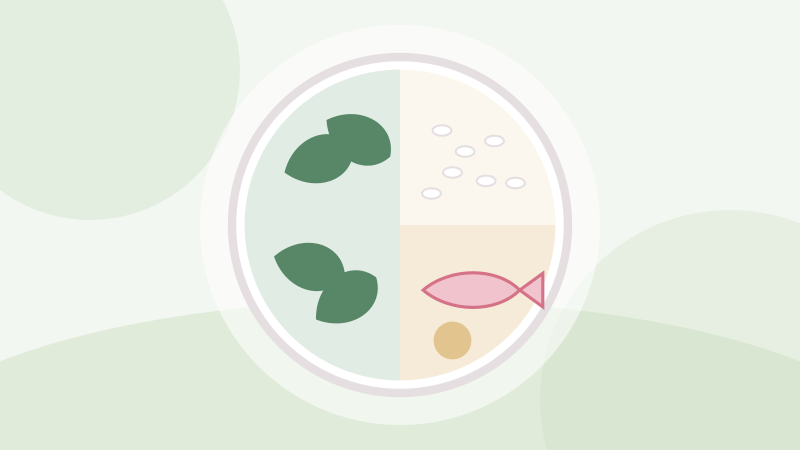
Half the plate vegetables and fruit, a quarter rice or roti, and a quarter fish, egg, dal or meat. A little less rice and a little more vegetables is the single biggest change. Local fruit in season, such as guava, banana, papaya and amra, is cheap and full of goodness.
Iron
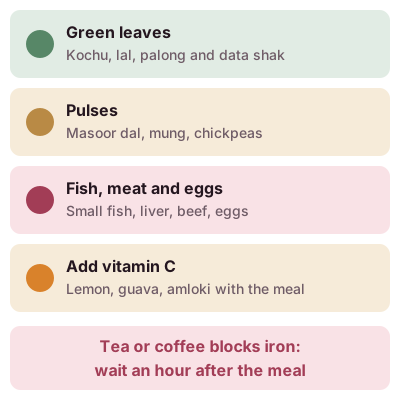
Periods take iron out of the body every month, which is why anaemia is so common in women.
Calcium and vitamin D
For strong bones, have milk, yoghurt, small fish eaten with their bones (mola, kachki), green leaves and sesame. Vitamin D is made in sunlight. Many women in Bangladesh spend most of their time indoors, so a shortage is common; get 15 to 20 minutes of sun on your face and arms a few days a week.
If you might have a baby: folic acid
Taking a folic acid tablet (400 micrograms) every day from at least a month before pregnancy until 12 weeks greatly reduces the risk of the baby being born with a defect of the brain or spine. Many pregnancies aren’t planned, so if you could become pregnant, it’s best to start early. And always cook with packet iodised salt.
At different ages
- Teenage years: the body grows fast and periods begin, so you need more iron and calcium. Don’t skip breakfast, and keep crisps and fizzy drinks for now and then.
- Pregnancy and breastfeeding: one extra meal and two snacks a day, and take the iron-folic acid and calcium your doctor gives you regularly.
- After 40 and after menopause: calcium for your bones, and less salt, oil and sugar. Walk for half an hour every day.
Small habits
Eat with the family, not after them. Drink around 8 glasses of water a day. Cut down the sugar in your tea. Swap fried snacks for puffed rice and chickpeas, fruit or nuts. And keep an eye on your waist: for women, a waist over 80 cm (about 31½ inches) raises the risk of diabetes and heart disease.
See a doctor if
- You always feel tired or dizzy (to check for anaemia)
- You’re losing weight without trying
- You worry a lot about food, or are deliberately not eating
- You’re planning a baby: have a check-up first