Trying for a baby with PCOS: what helps, and when to get help
With PCOS, ovulation is irregular, so getting pregnant can take longer. A healthy weight, keeping track of your cycle, and ovulation medicine from a doctor help most women get there.
Written by: Siratul Jannat (BMDC A-109809) · Medically reviewed by: Siratul Jannat (BMDC A-109809)
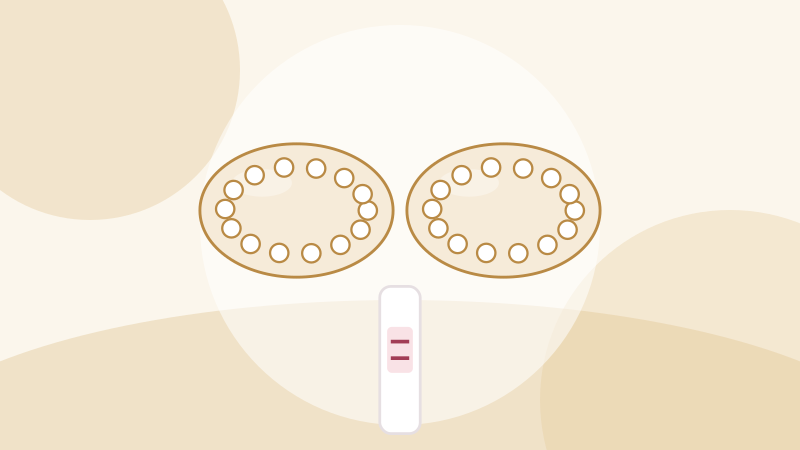
With PCOS, eggs are released less often and less predictably, which is why it can take longer to get pregnant. The encouraging part is that ovulation can usually be helped along, and most women with PCOS who want a baby do have one.
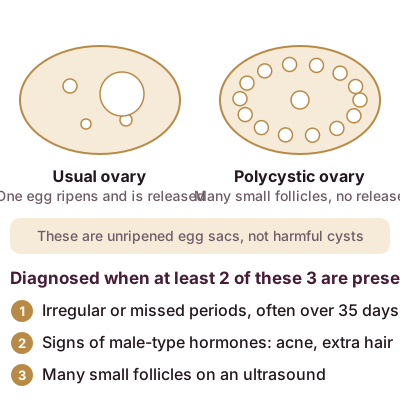
Before you start trying
- Start folic acid at least a month before. If you have PCOS and a higher weight, you may be advised a higher dose, so ask your doctor.
- If you're overweight, losing even 5 percent of your weight can restart ovulation.
- Get your blood sugar, blood pressure and thyroid checked.
- Your husband should stop smoking and may need a semen test; problems on the man's side are common too.
Know your cycle
Write down your period dates. When cycles are very irregular, it's hard to pin down your fertile days, so having sex every 2 to 3 days right through the cycle is simpler than trying to hit one day.
When to see a doctor
With PCOS and irregular periods, see a doctor after about 6 months of trying, or straight away if your periods are very infrequent or you're over 35. You don't need to wait a full year.
Treatment that helps ovulation
- Ovulation tablets, taken for a few days early in the cycle. Often the first step.
- Ultrasound monitoring (a follicle study), to see whether an egg is growing and to time sex.
- Medicine for insulin resistance, added for some women.
- Injections or ovarian drilling, if tablets don't work.
- IVF, for women who don't respond to simpler treatment or have other fertility problems.
Ovulation medicine must be supervised by a doctor. Taken without monitoring, it can lead to twins or overstimulated ovaries.
Once you're pregnant
PCOS raises the chance of pregnancy diabetes and high blood pressure, so your doctor may check your blood sugar earlier than usual. Keep every antenatal appointment, and keep up the healthy eating and gentle activity.