Can PCOS be cured? What's myth and what's fact
PCOS is one of the commonest hormone conditions in women, and many in Bangladesh are never diagnosed. It doesn't go away for good, but it can be controlled very well, and most women with PCOS can have children.
Written by: Siratul Jannat (BMDC A-109809) · Medically reviewed by: Siratul Jannat (BMDC A-109809)
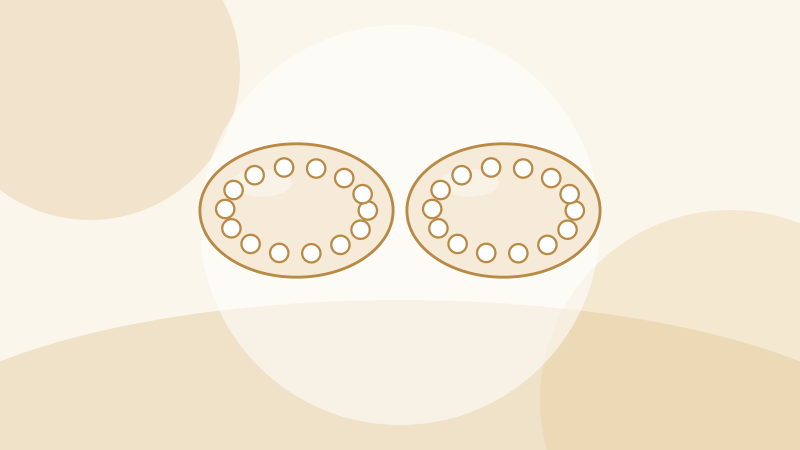
Polycystic ovary syndrome, PCOS, is a hormone condition that changes how the ovaries work. It's one of the most common reasons for irregular periods and for difficulty getting pregnant, and studies from Bangladesh suggest that many women who have the symptoms have never been told. Once you understand it, it becomes much easier to manage.
How it's diagnosed
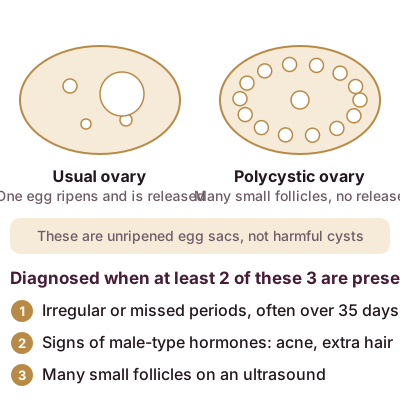
Doctors usually call it PCOS when a woman has at least two of these three, and other causes have been ruled out:
- Irregular or absent periods, often more than 35 days apart
- Signs of raised male-type hormones: acne, extra hair on the face or body, thinning hair on the head, or a high testosterone level on a blood test
- Many small follicles on an ultrasound of the ovaries
Thyroid and prolactin tests are often done as well, because they can cause similar symptoms.
"PCOS means cysts, so I'll need an operation"
The "cysts" in PCOS are small follicles, eggs that didn't fully ripen. They aren't tumours and don't need to be removed.
"Only overweight women get PCOS"
Women of any size can have it. Extra weight can make the symptoms worse, and losing even 5 to 10 percent of your body weight often makes periods more regular, but slim women get PCOS too.
"I'll never have children"
Most women with PCOS do get pregnant, some naturally, some with simple treatment that helps ovulation. If you're trying and your periods are irregular, see a doctor early rather than waiting a whole year.
"Marriage or a baby will sort it out"
Marriage doesn't change PCOS, and neither does pregnancy. This belief delays care for a lot of young women. PCOS is managed with lifestyle and, when needed, medicine.
"It's only about periods"
PCOS also raises the long-term risk of type 2 diabetes, high cholesterol and high blood pressure, and, if periods are very infrequent, thickening of the womb lining. Women with PCOS are also more likely to feel anxious or low. Regular checks of blood sugar and blood pressure are part of looking after it properly.
So, can it be cured?
PCOS is a long-term tendency, so it doesn't vanish for ever. But the symptoms can be controlled very well. With the right care, many women have regular periods, clear skin and healthy pregnancies.
How it's managed
- Lifestyle: regular activity, balanced meals with less sugar and less white rice and flour, enough sleep.
- Periods: hormonal pills, or progestogen tablets every few months, protect the womb lining and regulate bleeding.
- Acne and hair: certain pills, skin treatment and hair removal.
- Pregnancy: medicines that help ovulation, under a doctor's eye.
- Blood sugar: a doctor may add medicine if insulin resistance or pre-diabetes turns up.
Worth asking your doctor
- Do my tests really confirm PCOS, or could something else explain this?
- Do I need a blood sugar test now, and how often after that?
- What should I do if I want to get pregnant in the next year?