Nasima was told her only choice was to lose her womb. It wasn't
At 42, Nasima flooded through pads and was always exhausted. The scan showed fibroids, and a relative said hysterectomy was the only answer. In fact there are several options, depending on size, symptoms and plans for children.
Written by: Siratul Jannat (BMDC A-109809) · Medically reviewed by: Siratul Jannat (BMDC A-109809)
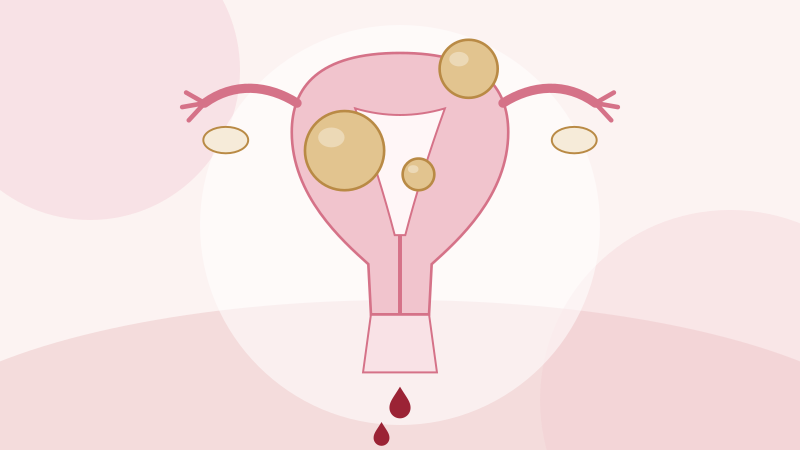
Nasima, 42, supervises a line at a garment factory in Ashulia. On the first two days of her period she was changing pads every hour, and sometimes leaked through her clothes at work. She passed large clots, got breathless on the stairs, and was tired all the time. Her belly had grown fuller, and she was passing urine more often.
Her haemoglobin was 7.8 g/dL, well below normal, and the ultrasound showed several fibroids, the largest 6 cm across. A relative told her the only treatment was to have the womb taken out. Frightened, Nasima put off doing anything for a whole year. When she finally saw a gynaecologist, she found out she had choices.
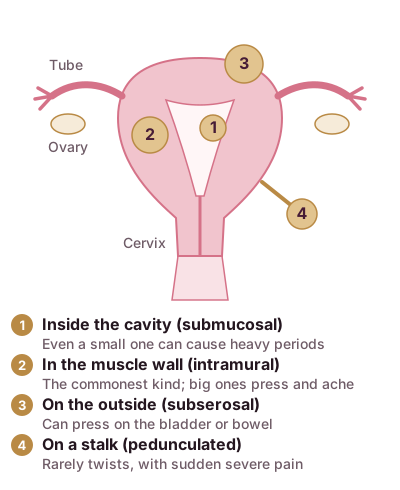
What fibroids are
- Non-cancerous growths of the muscle of the womb. They're very common, many women have them by 50, and most never need treating.
- What they do depends on their size and position: heavy or long periods, anaemia, pressure on the bladder or bowel, a swollen belly, pain, and sometimes trouble getting pregnant, or miscarriage.
- They usually shrink after menopause.
The options
- Watching and waiting, if symptoms are mild
- Medicine for heavy bleeding: tranexamic acid during periods, anti-inflammatory painkillers, or hormonal treatment
- A hormonal coil (LNG-IUS), which can cut bleeding a great deal if the shape of the womb allows
- Short-term injections to shrink fibroids before surgery
- Myomectomy: removing the fibroids and keeping the womb, for women who want children
- Hysteroscopic removal, for fibroids inside the cavity of the womb
- Uterine artery embolisation, at some centres, which blocks the fibroids' blood supply
- Hysterectomy, removing the womb, which ends the bleeding for good. A good choice for some women, but not the only one.
What Nasima chose
First her anaemia was treated, with iron through a drip. She had finished her family and wanted something permanent, so after talking through the options she chose a hysterectomy, keeping her ovaries. Six weeks later she was back at work. "I wish I'd come a year earlier," she said. "I spent all that time exhausted, for nothing."
See a doctor if
- You soak a pad every 1 to 2 hours, pass large clots, or bleed for more than 7 days
- You feel tired, breathless or dizzy
- You have a heavy feeling or swelling in the lower belly
- A fibroid grows quickly, or you have new bleeding after menopause
This story is illustrative. Names, places and details are made up; it is not about a real patient.