Milk from both breasts, though her youngest was six
Dilruba noticed milky fluid leaking from her breasts, her periods went irregular, and she felt tired and cold. After a social media post she feared cancer or a brain tumour. The cause was an underactive thyroid, fixed with one small tablet a day.
Written by: Siratul Jannat (BMDC A-109809) · Medically reviewed by: Siratul Jannat (BMDC A-109809)
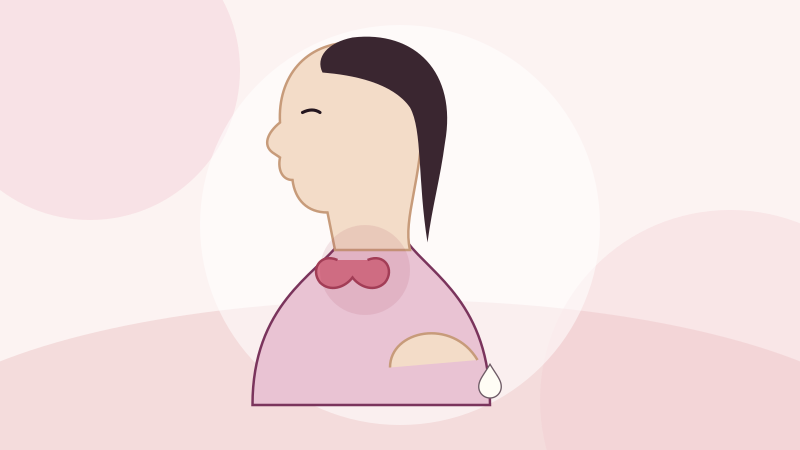
Dilruba, 31, from Jamalpur, had read a post on social media, and by the time she reached the doctor she was convinced she had breast cancer or a brain tumour.
For weeks, a white, milky fluid had been leaking from both nipples, though her youngest child was six years old. Her periods had gone irregular and she'd put on weight. She also felt tired, was cold all the time, was constipated, and her skin had become dry.
The doctor's first question was about medicines, since some for nausea, acidity and mental health raise the milk hormone. Dilruba wasn't taking any. A pregnancy test was negative. Blood tests showed a raised prolactin (the milk hormone) and a high TSH: hypothyroidism, an underactive thyroid.
How a slow thyroid makes milk
When the thyroid is underactive, the brain sends out more of a signalling hormone to push it. That same signal also stimulates prolactin, and raised prolactin causes milk production and upsets ovulation, which is why her periods had gone irregular. It can also make it harder to conceive.
Other causes of a milky discharge
- Pregnancy, and recent breastfeeding (it can carry on for a year or two after stopping)
- Medicines: some anti-sickness, antipsychotic and blood pressure medicines
- A small benign growth on the pituitary (a prolactinoma), which tablets treat very effectively
- Frequent breast stimulation, kidney disease
Treatment
Dilruba started one thyroid hormone tablet a day (levothyroxine), taken on an empty stomach in the morning, 30 minutes before tea or food. Over the next three months her energy came back, her periods settled, and the discharge stopped. Her prolactin went back to normal without any other treatment.
When breast discharge needs checking urgently
- Discharge from one breast, or from a single duct
- Blood-stained, or clear and watery, discharge
- A lump in the breast, skin changes, or a nipple that has pulled in
- Headaches or changes in vision along with a high prolactin
Those need an examination and imaging. Milky discharge from both breasts is usually hormonal, not cancer.
This story is illustrative. Names, places and details are made up; it is not about a real patient.