Fibroids ("a tumour in the womb"): are they dangerous, and do you need an operation?
Fibroids are non-cancerous growths in the womb, very common after 30. Many cause no trouble and need no treatment at all. Heavy periods, pressure or fertility problems are the reasons to treat.
Written by: Siratul Jannat (BMDC A-109809) · Medically reviewed by: Siratul Jannat (BMDC A-109809)
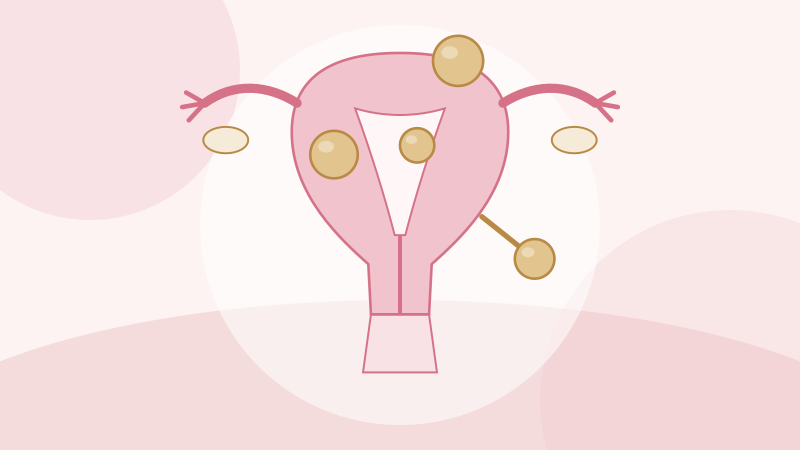
Fibroids are growths of muscle in or on the womb. In Bangladesh people often call them a "tumour in the womb", and that word alone frightens many women into thinking of cancer. So let's be clear: fibroids are almost always benign. They are not cancer, and they very rarely turn into cancer. They're very common, particularly from the 30s onwards, and they usually shrink after menopause.
Types
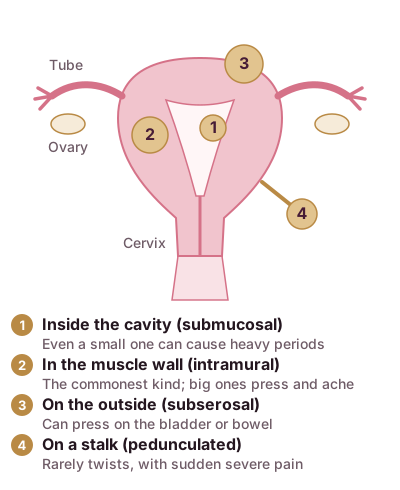
Fibroids are named after where they grow: inside the cavity of the womb (submucosal), within the muscle wall (intramural), or on the outside of the womb (subserosal). One on the outside sometimes hangs from a narrow stalk (pedunculated). Their size and position matter far more than how many there are.
Symptoms
Many women have none at all; the fibroid turns up by chance on an ultrasound. When there are symptoms, they include:
- Heavy or long periods, and anaemia
- Pressure in the lower belly, or a swollen belly
- Passing urine often, or constipation
- Back pain, or pain during sex
- Sometimes, trouble getting pregnant or problems in pregnancy
Does every fibroid need an operation?
No. A small fibroid that isn't causing symptoms is usually just watched, with an ultrasound now and then. Treatment comes into the picture when fibroids cause heavy bleeding, pain, pressure or fertility problems.
The options
- Medicines to reduce heavy bleeding and pain, and iron for anaemia. Some hormonal medicines shrink fibroids for a while, often before surgery.
- Myomectomy: removing the fibroids and keeping the womb. Right for women who want children.
- Hysterectomy: removing the womb. A permanent answer for women who have finished their family and have severe symptoms.
- Other procedures: some centres offer treatments that cut off the fibroid's blood supply.
Ask your doctor about the benefits and risks of each option for you. Before major surgery, it's entirely reasonable to ask for a second opinion.
Keep your reports
Keep every ultrasound report, with its date. Comparing the size over time is how the doctor decides whether treatment is needed.
See a doctor urgently if
You have very heavy bleeding with dizziness, sudden severe belly pain, or a fibroid that is growing quickly after menopause.