Endometriosis: when period pain is more than "just periods"
About 1 in 10 women of reproductive age has endometriosis. Severe period pain, pain during sex and trouble getting pregnant are the usual signs. It often takes years to be diagnosed, but treatment does help.
Written by: Siratul Jannat (BMDC A-109809) · Medically reviewed by: Siratul Jannat (BMDC A-109809)
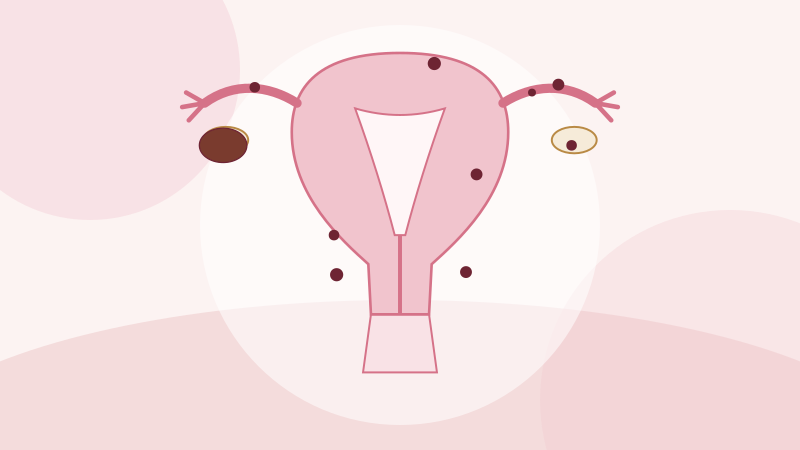
In endometriosis, tissue similar to the lining of the womb grows where it shouldn't: on the ovaries, behind the womb, on the tubes. Every month it responds to hormones just as the womb lining does, and the result is inflammation and pain. The World Health Organization estimates it affects about 1 in 10 women of reproductive age worldwide. It is a long-term condition, but a very manageable one.
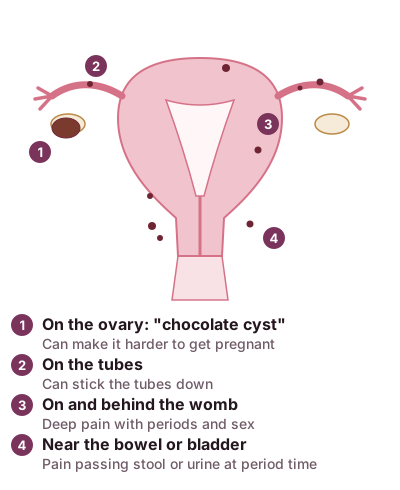
The usual symptoms
- Severe period pain that gets worse over the years and isn't helped by painkillers
- Deep pain during or after sex
- Pain in the lower belly or back at other times of the month
- Pain passing stool or urine during periods
- Difficulty getting pregnant
- Tiredness
Some women have very few symptoms, and how much pain you feel doesn't always match how much endometriosis there is.
Why it so often gets missed
Many women grow up being told that painful periods are just part of being a woman, so they put up with it for years before seeing anyone. If your pain is getting in the way of your life, it deserves proper attention.
How it's diagnosed
The doctor will ask about your symptoms and may examine you. An ultrasound, often a TVS, can show cysts on the ovaries called endometriomas, or "chocolate cysts". Smaller patches may not show up on a scan. A definite diagnosis sometimes needs keyhole surgery (laparoscopy), but treatment can often start on the basis of your symptoms alone.
Treatment
- Painkillers, especially anti-inflammatory ones, taken as advised
- Hormonal treatment, such as the combined pill, progestogen tablets or a hormonal coil, which reduce or stop periods and the pain with them
- Surgery to remove patches or cysts when pain is severe or fertility is affected
Endometriosis can't always be cured, but most women find a treatment that keeps it well under control.
Endometriosis and getting pregnant
Plenty of women with endometriosis get pregnant naturally. If you've been trying for 6 to 12 months without success, talk to your doctor early; there are good options.
See a doctor if
Period pain is affecting your daily life, sex is painful, or you're struggling to conceive. A simple pain diary over 2 or 3 cycles helps the doctor a great deal.