A week after the wedding, it burned every time she passed urine
Newly married Afroza had burning, urgency and pain above her pubic bone. It was a bladder infection, very common in young women. Treatment is simple, and a few habits stop it coming back.
Written by: Siratul Jannat (BMDC A-109809) · Medically reviewed by: Siratul Jannat (BMDC A-109809)
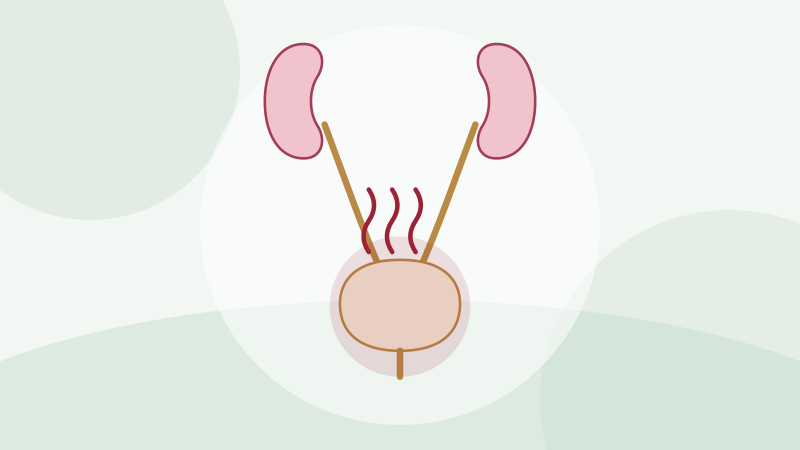
Afroza, 23, from Kushtia, had just married and moved into her in-laws' home. A week later, passing urine had become painful: it burned every time, she needed to go every half hour, and there was a dull ache just above her pubic bone. She was far too shy to mention it in a new house, so she started drinking less water, hoping she wouldn't need the toilet so often. It got worse.
It was her elder sister who took her to a doctor. A urine test showed signs of infection: cystitis, an infection of the bladder.
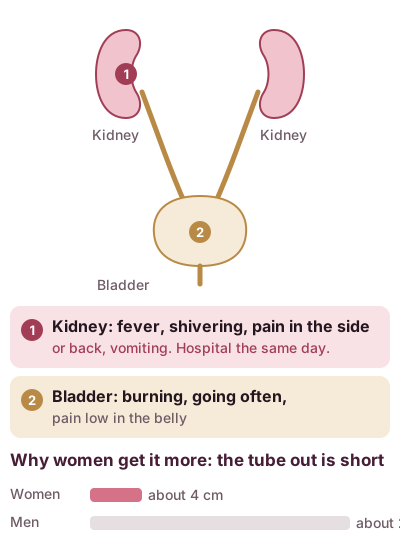
Why women get it so often
- Women have a short urethra, the tube from the bladder, so bacteria from around the back passage reach the bladder easily.
- Sex can push bacteria towards the urethra, which is why it so often turns up soon after marriage; it's sometimes called "honeymoon cystitis". It isn't a sexually transmitted infection.
- Holding urine for a long time, drinking too little, constipation, pregnancy and diabetes all raise the risk.
Treatment
A short course of an antibiotic chosen for bladder infections, paracetamol for the pain, and plenty of water. Afroza felt better in two days. The doctor told her not to keep leftover tablets, and never to buy antibiotics without a prescription, because misuse makes bacteria resistant.
Stopping it coming back
- Drink enough that your urine stays pale
- Don't hold on for long, and empty your bladder fully
- Pass urine soon after sex
- Wipe from front to back
- Avoid constipation
See a doctor quickly if
- You have a fever, shivering, back or side pain, or vomiting: the infection may have reached the kidneys
- There's blood in your urine
- You're pregnant
- You're no better after 2 to 3 days of treatment, or it keeps coming back
This story is illustrative. Names, places and details are made up; it is not about a real patient.