Her friends were sure it was appendicitis. It was pelvic inflammatory disease
Tania had pain low on both sides of her belly, a fever and pain during sex. It was an infection of the womb and tubes. Treating it fully, and treating her partner, protects her chance of a baby later.
Written by: Siratul Jannat (BMDC A-109809) · Medically reviewed by: Siratul Jannat (BMDC A-109809)
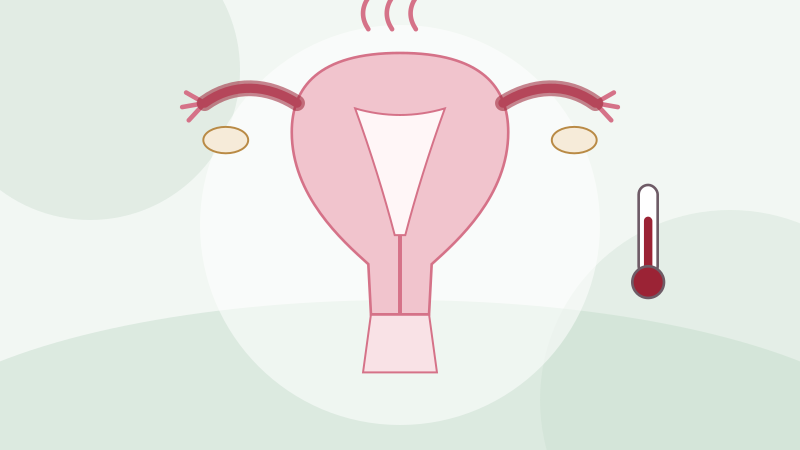
Tania's friends in the hostel were convinced it was appendicitis. She was 22, a university student in Rajshahi, and for a week she'd had a dull ache low down on both sides of her belly. Then came a fever, a bad-smelling discharge, and pain during sex.
In the emergency department, the doctor examined her abdomen and then, with a female nurse present, did an internal examination. Gently moving the cervix caused sharp pain on both sides. A pregnancy test was negative, and the ultrasound showed no abscess. The diagnosis was pelvic inflammatory disease (PID): an infection that had spread up from the cervix into the womb, tubes and ovaries.
What causes PID
- Often sexually transmitted infections such as chlamydia and gonorrhoea, though other bacteria can be involved
- Sometimes infection getting into the womb after a birth, miscarriage, abortion or a coil being fitted
Why it matters
Each bout of PID can scar the fallopian tubes, which raises the risk of long-term pelvic pain, ectopic pregnancy and infertility. Treating it early, and completely, lowers that risk.
Tania's treatment
- An injection, then two weeks of antibiotic tablets
- Pain relief and rest
- A review after 3 days to make sure she was improving; if not, admission for antibiotics through a drip
- Her partner advised to get tested and treated
- No sex until they'd both finished treatment
She was told to finish every tablet, even once she felt better after a few days. Stopping early is one of the commonest reasons PID comes back.
Go to hospital if you have
- Severe pain low in the belly, with fever or vomiting
- Belly pain with a missed period (to rule out an ectopic pregnancy)
- Pain that isn't improving within 3 days of treatment
Prevention
- Condoms lower the risk
- Get tested if you or your partner has symptoms, or after a new partner
- Treat partners at the same time
This story is illustrative. Names, places and details are made up; it is not about a real patient.