Sabina washed inside every day to get rid of the smell. It only made it worse
Sabina used antiseptic inside her vagina daily to stop a fishy smell, and it kept coming back stronger. The cause was bacterial vaginosis, made worse by douching. Simple treatment and a few changes in habit fixed it.
Written by: Siratul Jannat (BMDC A-109809) · Medically reviewed by: Siratul Jannat (BMDC A-109809)

Sabina, 31, works in an office in Dhaka, and for months she'd been quietly mortified. She had a thin, greyish discharge with a strong fishy smell, worse after her period and after sex. So she started washing inside her vagina with antiseptic liquid every day. Each time the smell came back, stronger than before.
Her gynaecologist examined her, checked the discharge, and diagnosed bacterial vaginosis (BV).
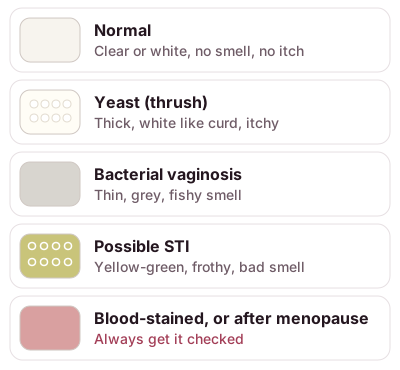
What BV is
- The vagina normally contains "good" bacteria that keep it slightly acidic. In BV the balance shifts and other bacteria overgrow.
- It is not caused by poor hygiene, and it isn't mainly a sexually transmitted infection, though sex can set it off.
- The typical sign is a thin white or grey discharge with a fishy smell, usually without itching or soreness.
What makes it more likely
- Washing inside the vagina (douching), and antiseptics, perfumed soaps or sprays
- A new sexual partner
- A Copper-T, smoking
In other words, Sabina's daily washing had been feeding the problem.
Treatment
A short course of antibiotic tablets (a gel is another option), with no alcohol while taking them. Her partner didn't need treatment. Within a week the smell had gone.
Keeping it away
- Wash only the outside (the vulva), with plain water or a mild unperfumed soap
- Don't wash inside the vagina; it cleans itself
- Skip antiseptic liquids, bubble baths and vaginal deodorants
- Wear cotton underwear
- If BV keeps coming back, your doctor can suggest a longer treatment plan
BV in pregnancy
BV in pregnancy is linked to a higher chance of early labour. If you notice an unusual discharge while pregnant, see your doctor; the treatment is safe.
When it might be something else
See a doctor if the discharge is yellow or green, frothy, or comes with itching, pain, fever or bleeding, or if you have a new partner. Those need testing for other infections.
This story is illustrative. Names, places and details are made up; it is not about a real patient.