A fishy smell from the vagina? It's usually bacterial vaginosis
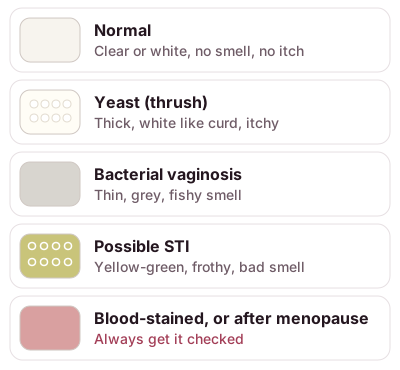
Thin grey-white discharge with a fishy smell, often stronger after sex, is usually bacterial vaginosis. It's common, it isn't caused by poor hygiene, and antibiotics treat it.
Written by: Siratul Jannat (BMDC A-109809) · Medically reviewed by: Siratul Jannat (BMDC A-109809)

Bacterial vaginosis, BV, happens when the normal mix of bacteria in the vagina gets out of balance. It's the most common cause of unusual discharge in women of reproductive age.
What you'll notice
- Thin, watery, grey or white discharge
- A strong fishy smell, often worse after sex or during a period
- Usually no itching or soreness
About half of women with BV notice nothing at all.
What causes it
Not being dirty. In fact, washing inside the vagina, perfumed products and vaginal "cleansing" liquids all make BV more likely. A new partner, smoking and a Copper-T can raise the chance too.
Treatment
Antibiotic tablets or a vaginal gel prescribed by a doctor. Finish the whole course, even once the smell has gone. With some BV medicines you must avoid alcohol; your doctor or pharmacist will tell you. Husbands don't usually need treatment.
Why it matters
- In pregnancy, BV may be linked with early labour, so mention any symptoms to your doctor.
- BV can make it easier to pick up other infections.
- Before a Copper-T is fitted or abortion care is given, BV is often treated first.
If it keeps coming back
BV often does return. Your doctor may suggest a longer course. The single most useful thing you can do is stop douching and stop using perfumed products.
See a doctor if
You notice a fishy smell or unusual discharge, particularly if you're pregnant, or it comes back after treatment.