A breech baby: turning, normal birth or caesarean
Many families book a caesarean as soon as a 32-week scan says "breech". But most babies turn head-down by themselves before 36 weeks. When to think about it, what turning the baby from outside involves, and how the way of delivery is decided.
Written by: Siratul Jannat (BMDC A-109809) · Medically reviewed by: Siratul Jannat (BMDC A-109809)
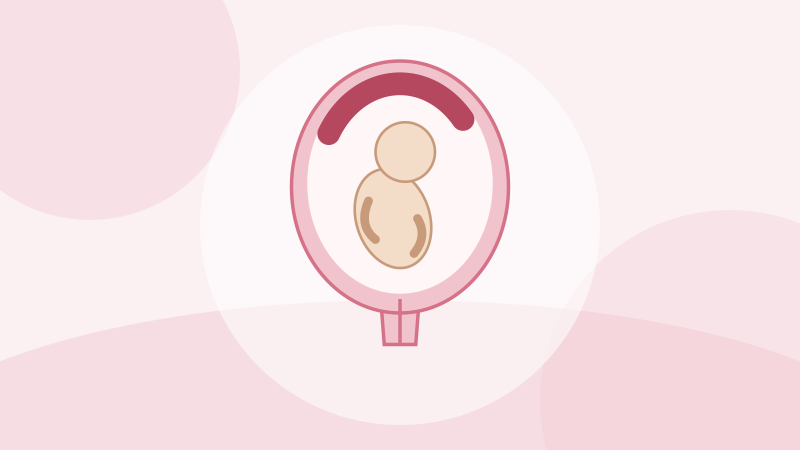
Until mid-pregnancy the baby has plenty of room and moves around. At 28 weeks, about one baby in four or five is breech, meaning head up and bottom or feet down. Most turn by themselves later. At full term only 3 or 4 babies in 100 are still breech.
Why babies stay breech
Often no reason is found. It's more common in early labour, with twins, with very low or very high fluid, a low placenta, an unusually shaped womb or fibroids, and after a previous breech baby.
Before 36 weeks
If a 32-week scan shows breech, there's usually nothing to do but wait. Around 36 weeks your doctor will check again, by feeling your belly or with a scan. There's no evidence that the knee-chest position or special exercises turn the baby. They do no harm, but don't rely on them.
Turning the baby from outside (ECV)
If the baby is still breech at 36 or 37 weeks, an experienced doctor can try to turn the baby head-down by pressing with their hands on your belly, a bit like a somersault. It's done in hospital with the baby's heartbeat checked before and after, often with an injection to relax the womb.
- It works about half the time, more often in women who have had a baby before.
- It's uncomfortable. Very rarely, problems with the baby's heartbeat or bleeding mean an emergency caesarean, so it's done where a caesarean is available.
- If you're Rh negative, you'll need anti-D afterwards.
- It isn't done if the placenta is low, you're bleeding or your waters have broken, with twins, or if you'll need a caesarean for another reason anyway. After a previous caesarean, your doctor will weigh it up separately.
Not every hospital in Bangladesh offers ECV. If your baby is breech, ask your doctor at 35 or 36 weeks where it's available.
Delivery: normal or caesarean
The biggest worries in a vaginal breech birth are the head getting stuck after the body is born, and the cord slipping down when the waters break. A large study found that a planned caesarean led to fewer serious complications for term breech babies. So most places now advise a planned caesarean around 39 weeks, especially for a first baby.
In some cases, though, with an experienced doctor, a baby who isn't too big, a head that's tucked down and the bottom (not the feet) coming first, a vaginal birth can be safe. Talk openly with your doctor about the risks and benefits before deciding. When the second of twins is breech, it's often born vaginally.
Go to hospital straight away if
- Your waters break while your baby is breech. The cord is more likely to slip down with a breech baby. If you see or feel the cord in the vagina, get into the knee-chest position and go to hospital at once.
- Regular pains start before your planned caesarean
- You bleed or your baby moves less
Never try to have a breech baby at home with a traditional birth attendant.