"Once a caesarean, always a caesarean?" Moushumi’s second baby was born normally
Moushumi had a caesarean because her first baby was breech. The second time, everyone said it would have to be a caesarean again. Her doctor said otherwise. Who can safely try for a vaginal birth after caesarean (VBAC), how big the risk is, and where to try.
Written by: Siratul Jannat (BMDC A-109809) · Medically reviewed by: Siratul Jannat (BMDC A-109809)
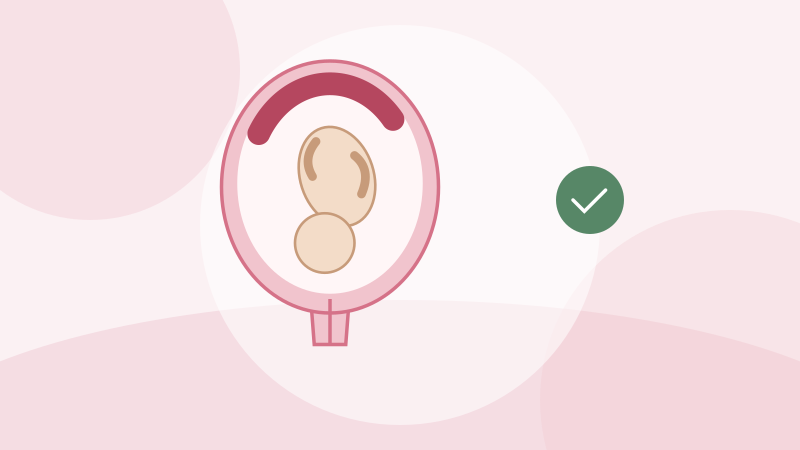
Moushumi, 27, lives in Bogura. Three years ago she had a caesarean because her first daughter was breech. Now she was 20 weeks into her second pregnancy, and her aunt, her sister-in-law and the woman next door all said the same thing: "Once you've been cut, you can't have a normal birth."
At her check-up, the doctor asked for the papers from the operation. Moushumi had kept them safely. They said: lower segment, transverse incision, reason breech. The doctor read them and said, "You've a good chance of a normal delivery. If you'd like, we can plan for it."
What VBAC is
A vaginal birth after a caesarean is called VBAC. If your one or two caesareans were done with a cut across the lower part of the womb, you can try for one. Of the women who try, about 60 to 80 in every 100 have a vaginal birth.
Success is more likely when
- The reason for the last caesarean isn't there this time: a breech baby, a problem with the baby's heartbeat, a low placenta. That was Moushumi's situation, and then about 80 in 100 succeed.
- You've had a vaginal birth before
- Labour starts on its own
The chance is lower if the last caesarean was because the cervix didn't open, if the baby is very big, if the mother is very overweight, or if the due date has passed. You can still try, but the chance is closer to 60 in 100.
The real risk
The biggest worry is the womb tearing at the old scar during labour. After one caesarean with a low cross-ways cut, the risk is about 1 in 200. If it happens, both mother and baby are in danger and an operation is needed at once. That's why VBAC should only be tried in a hospital with an operating theatre, an anaesthetist and blood available at all times.
On the other hand, every caesarean carries risks too, and they grow with each one: bleeding, infection, injury to the bowel or bladder, and in later pregnancies the placenta growing into the old scar (placenta accreta), which can mean losing the womb. For women who want more children, a successful VBAC is a big gain.
Who shouldn't try
- Women whose previous caesarean was a vertical cut in the upper womb (classical) or a T-shaped cut
- Women whose womb has torn before
- Women whose placenta is low this time, or who can't have a vaginal birth for another reason
- If there are no operation papers and nobody knows what kind of cut was made, the doctor will weigh it up carefully
A short gap between pregnancies, especially a birth less than 18 months after the caesarean, raises the risk of tearing. Moushumi's daughter was three.
Moushumi's plan
- A hospital in the district town that could do a caesarean day and night
- Coming to hospital as soon as labour started
- Continuous monitoring of the baby's heartbeat throughout labour
- If labour hadn't started by 41 weeks, a decision then; not misoprostol, because after a caesarean it raises the risk of the womb tearing
- Moushumi could change her mind and ask for a caesarean at any point
Her mother-in-law wasn't keen at first. The doctor sat her down with Moushumi's husband and explained both the risks and the benefits. In the end the decision was Moushumi's.
What happened
At 39 weeks her pains started before dawn and she went straight to hospital. Nine hours later her son was born by normal delivery. The next day she walked to the bathroom by herself, something that had taken three days after her caesarean.
If you'd like a normal birth after a caesarean
- Keep the papers from your operation (the discharge certificate and operation notes). The type of cut is the most important information.
- Talk to your doctor about it by mid-pregnancy.
- Choose a hospital where an emergency caesarean is always possible.
- Never at home or with a traditional birth attendant.
- During labour, tell the staff at once about constant severe pain at the old scar, bleeding, or the baby moving less.
This story is illustrative. Names, places and details are made up; it is not about a real patient.