Pain relief in labour: the epidural and other options
"I won't be able to bear the pain of a normal delivery." Out of that fear, many women choose a caesarean. Yet there are safe ways to ease labour pain: a companion, moving about, breathing, painkilling injections and the epidural. What each is like, and where they're available in Bangladesh.
Written by: Siratul Jannat (BMDC A-109809) · Medically reviewed by: Siratul Jannat (BMDC A-109809)
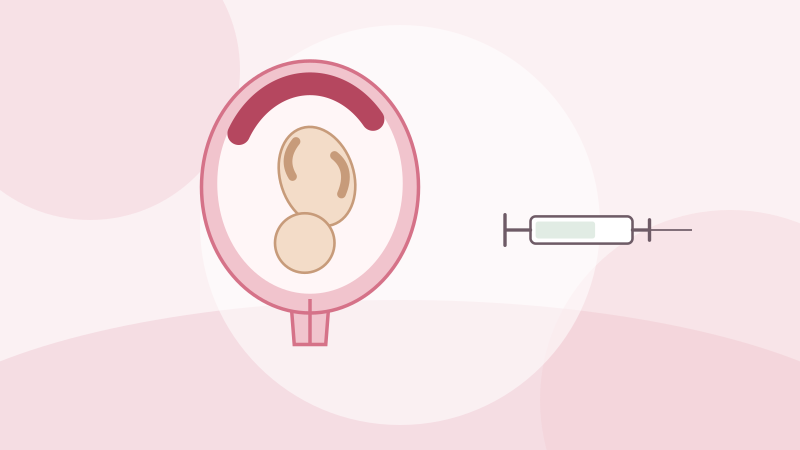
Fear of labour pain is completely natural, especially with a first baby. After hearing relatives' horror stories, many women ask for a caesarean purely to avoid it. But a caesarean is major surgery, and the pain, risks and recovery afterwards are no small thing either. Knowing the safe ways to ease labour pain makes the decision easier.
What helps without medicine
- Someone you trust beside you: your mother, sister or husband. The World Health Organization recommends a companion of the woman's choice throughout labour; it makes pain easier to cope with and means less medicine is needed. Ask the hospital in advance whether a companion can stay.
- Walking and changing position: walking in early labour, leaning on something while standing, kneeling, rocking on a ball. Lying flat on your back the whole time makes the pain worse.
- Massage with pressure on the lower back, and a warm compress.
- Breathing rhythmically: during a contraction, breathe in slowly through your nose and out long through your mouth. Practise a little during your pregnancy check-ups.
- Knowing what to expect: understanding what happens and how long it may take eases fear, and less fear makes pain feel less.
Painkilling injections (pethidine)
Given into a muscle or a vein. It doesn't take the pain away completely, but it takes the edge off and gives some rest between contractions. The mother may feel drowsy and sick, so an anti-sickness medicine is given with it. Given very close to the birth, it can make the baby drowsy and slow to breathe and to start feeding, so the doctor times it carefully.
The epidural
The most effective pain relief in labour. An anaesthetist places a thin tube between the bones of your lower back, and a low dose of medicine runs through it. Pain from the waist down eases a great deal or goes completely, but you stay awake and can still feel pressure.
- It can be given almost any time once contractions are regular; it's rarely "too early" or "too late".
- Blood pressure can drop a little, so you'll have a drip and your blood pressure will be checked.
- Your legs may feel heavy, and you may need a tube to pass urine.
- The pushing stage may be a little longer, and an instrumental delivery a bit more likely. It doesn't raise the caesarean rate.
- Some women get a mild fever.
- About 1 in 100 get a headache for a few days afterwards, which can be treated.
- "An epidural gives you back pain for life" is a myth. Many women have back pain after pregnancy, whether or not they had an epidural.
- The effect on the baby is very small, and it doesn't affect breastfeeding.
An epidural isn't suitable for everyone: not with a clotting problem or a very low platelet count, blood-thinning medicines, infection of the skin on the back, or very heavy bleeding.
Where it's available in Bangladesh
Not every hospital offers epidurals yet; an anaesthetist has to be available during labour. A number of government and private hospitals in Dhaka and some other large cities provide them. If you'd like one, ask your doctor at 34 to 36 weeks whether your hospital offers it, what it costs, and what you need to arrange.
Pain relief for a caesarean
Most caesareans are done under a spinal (one injection in the lower back); you stay awake and can see your baby straight after birth. If you already have an epidural, it can be topped up for the operation. In an emergency, a general anaesthetic is sometimes used.
Remember
- There's nothing shameful about asking for pain relief in labour; it's your right.
- Make a plan in advance, but you can change your mind during labour.
- Fear of pain alone shouldn't be the reason for a caesarean; talk it through openly with your doctor.