Your fertile days: when's the best time to try for a baby?
You're most fertile in the few days before an egg is released and on the day itself, usually about 14 days before your next period. Having sex every 2 to 3 days through the cycle covers those days without the stress of timing.
Written by: Siratul Jannat (BMDC A-109809) · Medically reviewed by: Siratul Jannat (BMDC A-109809)
A lot of couples worry about getting the "timing" right when they're trying for a baby. Once you understand how the cycle works, it becomes much simpler and a lot less stressful.
How it works
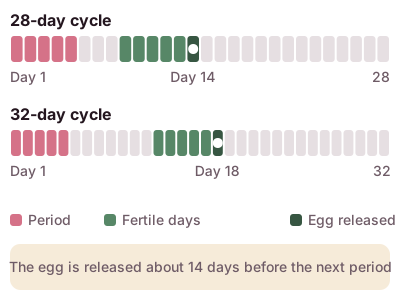
Each cycle, an ovary usually releases one egg (ovulation). The egg survives for about 12 to 24 hours, but sperm can survive inside a woman's body for up to 5 days. So your fertile window is the 5 days before ovulation plus the day of ovulation.
When do you ovulate?
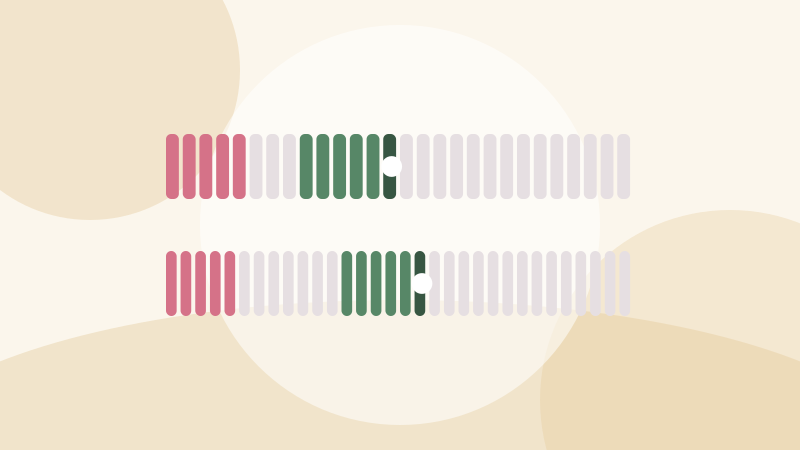
Usually about 14 days before your next period, not 14 days after the last one. In a 28-day cycle that's around day 14; in a 32-day cycle, around day 18. Day 1 is the first day of bleeding.
Signs of ovulation
- Clear, slippery, stretchy discharge, like raw egg white
- A mild ache on one side of the lower belly, for some women
- Ovulation test kits from the pharmacy, which pick up the hormone surge just before ovulation
The simplest approach
Have sex every 2 to 3 days right through the cycle. That way there are always sperm waiting when the egg is released, with no pressure to hit one particular day. Every day is fine too, but it isn't necessary.
Things that help
- Both of you: stop smoking, cut down on alcohol, keep to a healthy weight
- Her: start folic acid now
- Him: avoid very hot baths, tight underwear, and a laptop on the lap for hours
- Try to keep stress down; carry on living normally while you try
Myths
- "You must lie with your legs up afterwards." No need. Sperm reach the cervix within minutes.
- "It has to be day 14." Ovulation varies; regular sex works better than aiming for one day.
How long does it usually take?
About 8 in 10 couples conceive within a year of regular sex without contraception. See a doctor after 12 months of trying, after 6 months if the woman is 35 or older, or sooner if periods are irregular or there's a known problem.