Miscarriage again and again: causes, tests, and real hope for next time
Two or three miscarriages in a row are heartbreaking, but they are not hopeless. Tests find a treatable cause in some couples, and even when nothing is found, most women go on to have a successful pregnancy.
Written by: Siratul Jannat (BMDC A-109809) · Medically reviewed by: Siratul Jannat (BMDC A-109809)

One miscarriage is common and usually just bad luck. Two or three in a row is called recurrent miscarriage. It's deeply painful, and many women blame themselves. Please know that you didn't cause it, and that there is real reason for hope.
Possible causes
- Chromosome problems in the pregnancy, sometimes linked to a balanced chromosome change in either parent
- Antiphospholipid syndrome: an immune condition that causes clots in the placenta, and can be treated
- The shape of the womb, such as a septum, or fibroids inside the cavity
- A weak cervix, which usually causes later miscarriages, in the second trimester
- Thyroid problems and poorly controlled diabetes
- Age of the mother, and to some extent the father
- Smoking, being overweight
Stress, work, lifting, travel, sex and particular foods do not cause miscarriage.
The tests usually advised
- Blood tests for antiphospholipid antibodies, done twice, several weeks apart
- Thyroid and blood sugar tests
- An ultrasound (often 3D or TVS) to look at the shape of the womb
- Chromosome testing of the pregnancy tissue, and sometimes of both parents
Treatment
It depends on the cause: blood-thinning injections and low-dose aspirin for antiphospholipid syndrome, surgery for a septum, thyroid treatment, or a stitch in the cervix for cervical weakness. Your doctor may also suggest progesterone in a future pregnancy if you bleed.
When no cause is found
In about half of couples, nothing is found. Even then, most women go on to have a healthy baby next time, with supportive care, early scans and plenty of reassurance.
Next time you're pregnant
- See your doctor as soon as the test is positive
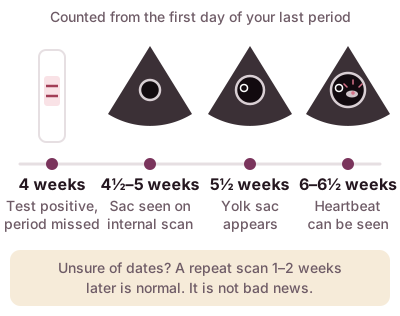
- Ask for an early scan to check the pregnancy is in the womb and growing
- Keep taking folic acid, don't smoke, and follow your treatment plan
- Get emotional support; feeling anxious is completely understandable