White discharge (leucorrhoea): when it's normal and when it's an infection
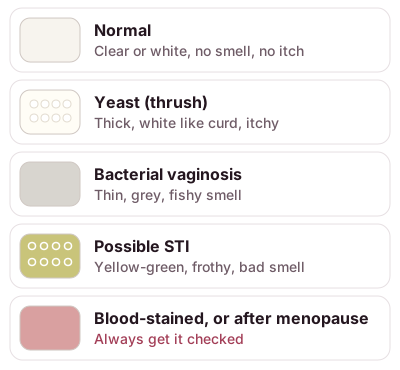
Clear or white discharge without itching or a bad smell is normal and healthy. A change in colour, smell or thickness, or itching and pain, usually means an infection, and those are easy to treat.
Written by: Siratul Jannat (BMDC A-109809) · Medically reviewed by: Siratul Jannat (BMDC A-109809)

White discharge, "sada srab" or leucorrhoea, is one of the things Bangladeshi women worry about most, and a lot of that worry comes from myths. Some discharge is completely normal. It keeps the vagina clean and moist, and it changes through the month.
Normal discharge
- Clear, white or slightly creamy
- No strong or unpleasant smell
- No itching, burning or pain
- More of it around mid-cycle (stretchy, like raw egg white), in pregnancy, when you're aroused, and on hormonal contraception
When it points to an infection
- Thick, white, curd-like discharge with itching and redness: usually a yeast (fungal) infection.
- Thin grey or white discharge with a fishy smell, often worse after sex: usually bacterial vaginosis.
- Yellow or green, frothy or foul-smelling discharge, sometimes with pain: possibly a sexually transmitted infection such as trichomoniasis.
- Discharge with lower belly pain, fever or pain during sex: possibly a pelvic infection, which needs prompt treatment.
- Blood-stained discharge, or any discharge after menopause: get it checked.
The big myth: "discharge drains your strength"
Many women are told that white discharge causes weakness, back pain or "loss of vitality". It doesn't. Normal discharge does not weaken the body. If you feel weak and tired, the cause is far more likely to be anaemia, poor sleep, thyroid trouble or stress, and those deserve a check-up of their own.
What helps
- Wash the outside with plain water. Don't wash inside the vagina (douching); it upsets the natural balance and leads to more infection, not less.
- Avoid perfumed soaps, sprays and strong washes.
- Wear clean cotton underwear, and change out of damp clothes quickly.
- Wipe from front to back after the toilet.
- Don't use someone else's leftover medicine or cream.
When to see a doctor
If the colour or smell changes, if you have itching or pain, if you're pregnant, or if it keeps coming back. Yeast and bacterial infections are treated with tablets or vaginal medicine. Some infections need your husband treated too, or they simply keep coming back.
Tests
The doctor may examine you and take a vaginal swab (HVS). If yeast infections keep returning, it's worth checking for diabetes.