Too little or too much fluid around the baby: what the AFI on your report means
"The fluid is low, drink more water." "The fluid is high, should I worry?" That one number on the scan report causes endless worry. Why the fluid goes down or up, when it matters, and what is done.
Written by: Siratul Jannat (BMDC A-109809) · Medically reviewed by: Siratul Jannat (BMDC A-109809)
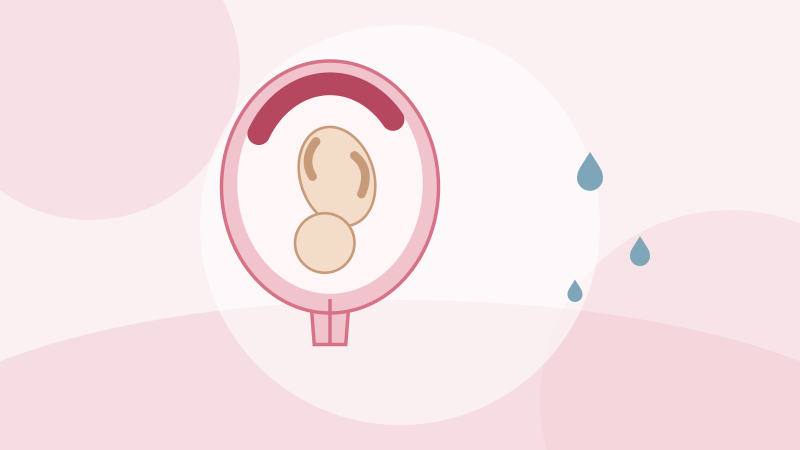
Your baby floats in a bag of fluid inside the womb. The fluid (amniotic fluid) cushions the baby, gives room to move, and helps the lungs develop. From mid-pregnancy onwards, most of it is actually the baby's urine, which the baby swallows again. So the amount of fluid says a lot about the baby's kidneys, swallowing and how well the placenta is working.
How it's measured on the report
- SDP (single deepest pocket): the depth of the deepest pool of fluid. More than 2 cm and less than 8 cm is normal.
- AFI (amniotic fluid index): four measurements, one in each quarter of the womb, added together. Roughly, above 5 and below 24 is normal.
Don't panic over a point or two either way; your doctor will look at the whole picture.
Too little fluid (oligohydramnios)
The usual reasons:
- The waters breaking or leaking, sometimes without the mother noticing. If your underwear keeps getting wet, especially with clear watery fluid, tell your doctor.
- The placenta not working well, often with a small baby or high blood pressure in the mother
- Going past the due date
- A problem with the baby's kidneys or urinary tract
- Some medicines, such as painkillers like ibuprofen or diclofenac after 20 weeks. The fluid usually comes back within a week of stopping.
What's done: looking for the cause (have the waters gone, the baby's growth and Doppler, the kidneys), and checking the baby often. If the fluid gets very low late in pregnancy, especially with a small baby or past the due date, the doctor may suggest delivering the baby.
Many women are told to "drink lots of water". If you're dehydrated, drinking more does raise the fluid a little, and drinking water does no harm. But it won't fix a problem with the placenta or kidneys, so don't skip the tests.
Too much fluid (polyhydramnios)
Most of the time the fluid is only a little high, no cause is found, and the baby is born healthy. The causes looked for are:
- Diabetes in the mother, from before pregnancy or gestational. If you haven't had a sugar test, you'll have one.
- Twins
- The baby having trouble swallowing, for example a problem with the food pipe, mouth or throat, or some chromosome conditions. A careful anomaly scan is done.
- Some infections, and anaemia in the baby
It can lead to a tight, uncomfortable belly, breathlessness, early labour, the cord slipping down when the waters break, and heavier bleeding after the birth. So give birth in hospital. If there's a great deal of fluid and you're struggling, some can occasionally be drained with a needle.
Go to hospital straight away if
- A lot of fluid suddenly comes from the vagina, or keeps leaking
- After your waters break, you see or feel the cord in the vagina: get on your knees with your chest down and go to hospital at once
- Your baby is moving less
- Your belly grows very fast, feels tight, or you struggle to breathe
- Regular pains start before 37 weeks