Anaemia in pregnancy: why it's so common, and how to prevent it
Many pregnant women in Bangladesh are anaemic. It causes tiredness and breathlessness and raises the risks at birth. Iron-rich food and iron and folic acid tablets, taken the right way, prevent most of it.
Written by: Siratul Jannat (BMDC A-109809) · Medically reviewed by: Siratul Jannat (BMDC A-109809)
Anaemia means too little haemoglobin, the part of the blood that carries oxygen. In pregnancy the body needs far more iron, to make extra blood for both mother and baby. Many women in Bangladesh start pregnancy with low iron stores, often because of heavy periods, pregnancies close together, or worms, so anaemia is very common.
Why it matters
Anaemia leaves you tired and breathless, and makes it harder for your body to cope with bleeding at the birth. It raises the risk of early birth and a low-birth-weight baby, and severe anaemia is dangerous for the mother.
Symptoms
- Tiredness and weakness
- Breathlessness on the stairs or when walking
- Dizziness, headaches
- Pale skin, pale inner eyelids and nails
- A fast heartbeat
Mild anaemia often causes no symptoms at all, which is why haemoglobin is checked at antenatal visits.
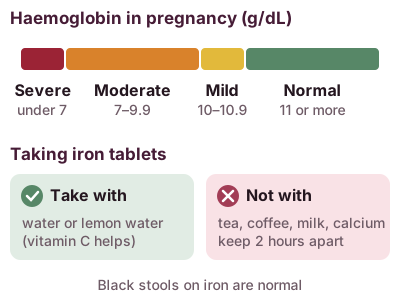
In pregnancy, haemoglobin below 11 g/dL counts as anaemia. In the middle three months the watery part of the blood increases most, so down to 10.5 is accepted then. Below 7 is severe and needs treatment without delay.
Taking iron tablets the right way
- Take iron and folic acid every day as advised, through pregnancy and for 3 months after the birth
- Take it with water or lemon water; vitamin C helps the body absorb it
- Not with tea, coffee, milk or calcium tablets; keep 2 hours between them
- Black stools are normal on iron
- If it makes you constipated or sick, take it after food or at night and drink more water. Tell the doctor rather than stopping.
Iron-rich food
Liver, red meat, small fish, eggs, dal, chickpeas, and dark green leafy vegetables such as kochu shak, lal shak and palong shak.
Other things that help
Your doctor may give deworming medicine in the middle trimester. If the anaemia is severe, or tablets aren't working, iron can be given through a drip, and occasionally a blood transfusion is needed.
See a doctor urgently if
You're very breathless even at rest, have chest pain, or feel faint.