Antenatal check-ups in Bangladesh: how many, when, and what happens at each
Bangladesh recommends at least 4 antenatal check-ups, and WHO now recommends 8 contacts. Each one checks you and your baby, and catches problems like high blood pressure and anaemia early.
Written by: Siratul Jannat (BMDC A-109809) · Medically reviewed by: Siratul Jannat (BMDC A-109809)
Antenatal care, ANC, simply means regular check-ups through pregnancy, and it's one of the most effective things there is for keeping mothers and babies safe. The government of Bangladesh recommends at least 4 visits; the World Health Organization now recommends at least 8 contacts. Antenatal care is free at community clinics, Union Health and Family Welfare Centres and Upazila Health Complexes.
A typical schedule
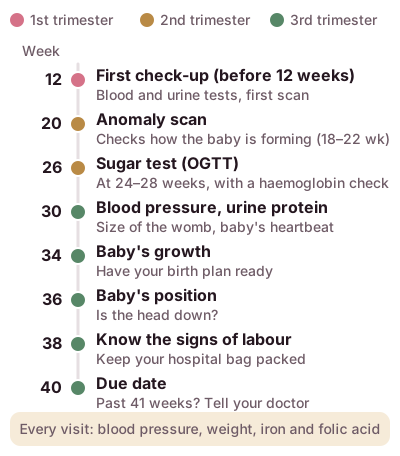
- First visit, ideally before 12 weeks: confirming the pregnancy and due date, blood pressure and weight, blood tests (Hb, blood group, sugar, HBsAg, VDRL, sometimes thyroid), a urine test, and an early ultrasound if available.
- Around 20 weeks: the anomaly scan, to check how the baby is developing (usually between 18 and 22 weeks).
- Around 24 to 28 weeks: a glucose test (OGTT) for pregnancy diabetes, and a haemoglobin check.
- From 28 weeks: visits every 2 to 4 weeks, then weekly towards the end, checking blood pressure, protein in the urine, the baby's growth, heartbeat and position.
At every visit
- Blood pressure and weight
- Questions about headaches, swelling, bleeding, pain and the baby's movements
- Measuring the size of the womb
- Iron, folic acid and calcium as advised
- The tetanus (TT/Td) vaccine, depending on what you've had before
Why the womb is measured
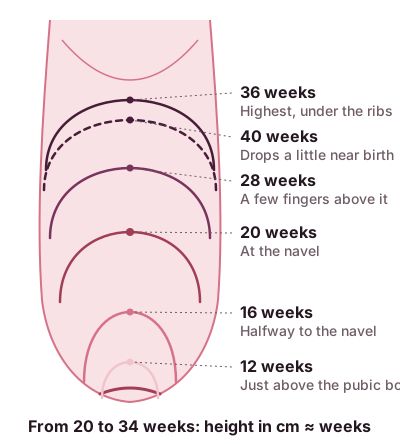
At each visit someone feels or measures how high the top of the womb has risen. After 12 weeks it rises above the pubic bone, and by 20 weeks it reaches the navel. Between 20 and 34 weeks, the distance from the pubic bone to the top of the womb in centimetres roughly matches the weeks of pregnancy: about 28 cm at 28 weeks. If it is well off, an ultrasound checks the baby's growth and the amount of fluid. Pass urine first; a full bladder makes the measurement read high.
Getting the most out of each visit
- Bring your pregnancy card and every report, every time
- Write your questions down beforehand
- Tell the doctor about any medicines, previous caesareans, miscarriages or illnesses
- Bring your husband or someone from the family when you can; they need to know the danger signs too
Make a birth plan
By about 7 months, decide where you'll give birth, how you'll get there at night, and who will go with you. Put money aside for transport and emergencies, and find someone with your blood group who could donate if needed.
Don't wait for the next visit if
You have bleeding, a severe headache or blurred vision, swelling of the face and hands, a fit, high fever, severe belly pain, water leaking, or the baby is moving less than usual. Go straight to hospital.