Bleeding after the birth: what's normal, and when it's an emergency
Bleeding after birth (lochia) is heavy at first and gets lighter over up to 6 weeks. Soaking more than one pad an hour, or passing large clots, is an emergency; heavy bleeding is the leading cause of maternal death.
Written by: Siratul Jannat (BMDC A-109809) · Medically reviewed by: Siratul Jannat (BMDC A-109809)
After any birth, normal or caesarean, the womb sheds blood and tissue as it heals. This bleeding is called lochia. Knowing what's normal helps you spot when it isn't. Heavy bleeding after birth (postpartum haemorrhage) is the leading cause of maternal death in Bangladesh, and acting fast saves lives.
Normal bleeding
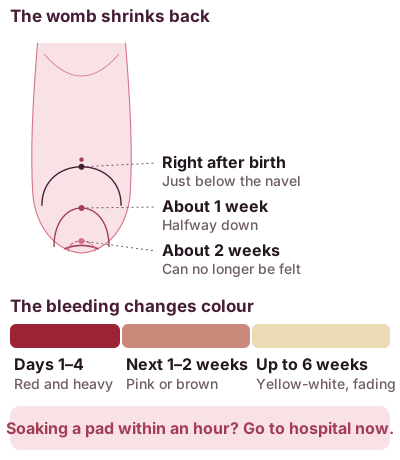
- First 3 to 4 days: bright red and heavy, like a heavy period, sometimes with small clots
- The next 1 to 2 weeks: lighter, pink or brown
- Up to 6 weeks: a yellowish-white discharge that slowly stops
It may pick up a little when you breastfeed or after you've been more active. That's normal, as long as it settles again.
The womb shrinks back
Straight after the birth the top of the womb sits just below the navel, and it drops a little each day. By about two weeks it has gone down behind the pubic bone and can no longer be felt from outside; by six to eight weeks it is back to its usual size. In the first few days you may get cramping pains, especially while breastfeeding. They are stronger after a second or later baby and usually ease by the third day. They mean the womb is tightening, which helps keep bleeding down. If your womb feels soft and the bleeding gets heavier, tell someone at once.
Emergency: go to hospital immediately
- Soaking more than one pad in an hour
- Passing clots bigger than a small lemon
- Bleeding that suddenly gets heavy again after it had become light
- Feeling dizzy or faint, a racing heart, or looking very pale
Call for help, lie down with your legs raised, and get to hospital as fast as you can. Families should arrange transport and a blood donor before the due date, not on the day.
See a doctor soon if
- The discharge smells bad
- You have a fever or chills
- Pain in the lower belly is getting worse
- You're still bleeding bright red after 2 weeks
These can be signs of infection, or of tissue left behind in the womb.
Looking after yourself
- Use pads, not tampons or cups, for 6 weeks
- Change pads often and wash with clean water
- Pass urine regularly; a full bladder can make bleeding worse
- Keep taking iron and folic acid for 3 months to build your blood back up