A swollen calf she blamed on a strained muscle, then sudden breathlessness
A week after her caesarean, Sharmin's left calf swelled and hurt. Days later, feeding her baby, she suddenly couldn't breathe: a clot had travelled to her lungs. Pregnancy and the weeks after birth raise the risk of clots. How to spot and prevent them.
Written by: Siratul Jannat (BMDC A-109809) · Medically reviewed by: Siratul Jannat (BMDC A-109809)
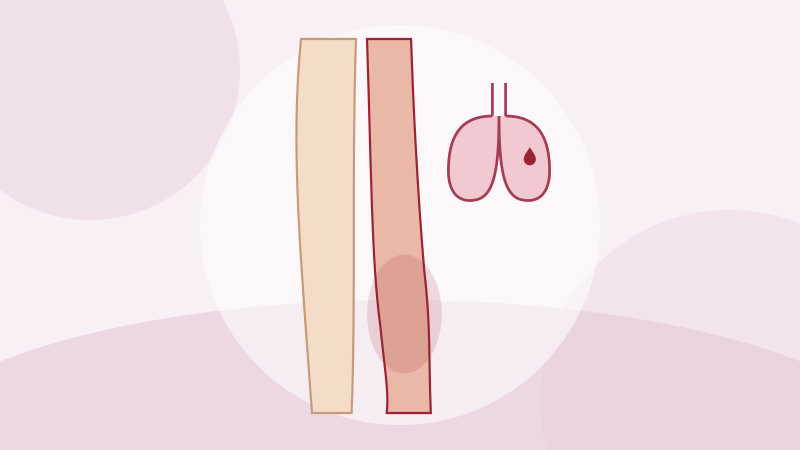
Sharmin, 34, from Tangail, spent most of the week after her caesarean in bed, because getting up hurt. On day 8 she noticed her left calf was swollen, warm, and painful when she walked. A pulled muscle, she thought.
Three days later, in the middle of feeding her baby, she suddenly couldn't get her breath. There was a sharp pain in her chest every time she breathed in, and her heart was racing. Her family called 999.
At the hospital, tests including a scan confirmed a deep vein thrombosis (DVT) in her leg and a pulmonary embolism: part of the clot had broken off and travelled to her lungs.
Why clots are more common in pregnancy and after birth
In pregnancy the blood naturally clots more easily, to protect against bleeding at the birth. The risk is highest in the first weeks after delivery, especially after a caesarean. Other things that add to it:
- Being immobile, or stuck in bed
- Being overweight, or over 35
- Heavy bleeding, infection, pre-eclampsia
- Dehydration, long journeys
- A clot in the past, or clots in the family
A clot in the leg (DVT) feels like
- Swelling of one leg, usually the calf
- Pain or tenderness, warmth, redness
A clot in the lung: call 999 or go to hospital immediately
- Sudden breathlessness
- Chest pain that's worse when you breathe in
- Coughing up blood
- Fainting, a racing heart
Treatment
Sharmin was treated with blood-thinning injections, which stop a clot growing and let the body dissolve it, and she continued them for several months. They're safe while breastfeeding. Her doctor told her that in any future pregnancy she'll need preventive injections.
Prevention
- Get up and walk as soon as you can after a birth or an operation, even if it's only a few steps
- Drink plenty of water
- If you're in bed, move your feet and ankles regularly
- If you're prescribed preventive injections or stockings after a caesarean, use them for the full course
- Tell your doctor if you've ever had a clot
This story is illustrative. Names, places and details are made up; it is not about a real patient.