Day four, and Kulsum's wound hurt more than on day one
After her caesarean, Kulsum's pain got worse instead of better, though the skin looked only slightly red. She had a rare, fast-spreading infection. Why pain out of proportion, dusky skin or a wound coming apart need urgent care.
Written by: Siratul Jannat (BMDC A-109809) · Medically reviewed by: Siratul Jannat (BMDC A-109809)
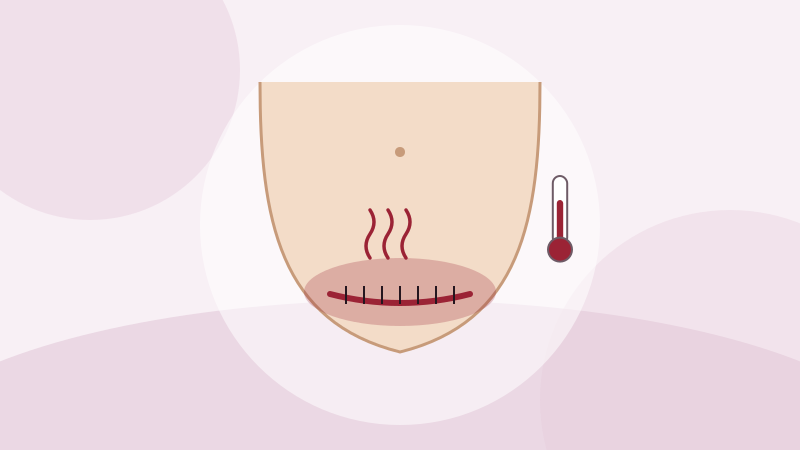
Pain after an operation is supposed to get better each day. Kulsum's didn't.
Kulsum, 38, from Chandpur, had diabetes and was overweight, and her fourth baby had been born by caesarean. By the fourth day the pain around her wound was far worse than it had been on the first. The skin was only a little red, but the area was swollen and very tender, and she had a fever. By the next morning part of the skin near the wound had turned a dusky purple, and she felt really ill.
The surgical team recognised the warning signs of necrotising fasciitis, a rare and fast-spreading infection of the deeper tissues. She went to theatre that same day to have the infected tissue removed, with strong antibiotics through a drip. It took a second operation and several weeks of wound care, but she recovered.
Normal healing, and the warning signs
Normal: pain that eases a little every day, some bruising, a small amount of clear fluid at first.
See a doctor the same day if there's:
- Redness spreading out from the wound, warmth, swelling
- Pus or a bad-smelling discharge
- Fever
- The edges of the wound pulling apart
Go to hospital immediately if:
- The pain is severe and much worse than the wound looks
- The skin turns dusky or purple, blisters, or goes numb
- You feel very unwell or confused, your heart is racing, or your blood pressure is low
- The wound bursts open, especially with something bulging through (that needs urgent repair)
Who's more likely to have wound problems
- Diabetes, especially when sugar is high
- Being overweight
- Smoking
- Anaemia and poor nutrition
- A long labour or emergency surgery, or steroid medicines
Helping a wound heal
- Keep your sugar controlled before and after surgery
- Keep the wound clean and dry, with no home remedies on it
- Eat protein-rich food and keep taking iron
- Hold a pillow against it when you cough or get up
- Go to your follow-up appointments
"I thought pain after an operation was just something you put up with," Kulsum said. "But mine was getting worse, not better. That was the sign."
This story is illustrative. Names, places and details are made up; it is not about a real patient.