Bleeding after menopause: why it always needs checking
Any vaginal bleeding a year or more after your last period is postmenopausal bleeding. Usually the cause isn't serious, but it can be an early sign of womb cancer, so get it checked within a couple of weeks.
Written by: Siratul Jannat (BMDC A-109809) · Medically reviewed by: Siratul Jannat (BMDC A-109809)
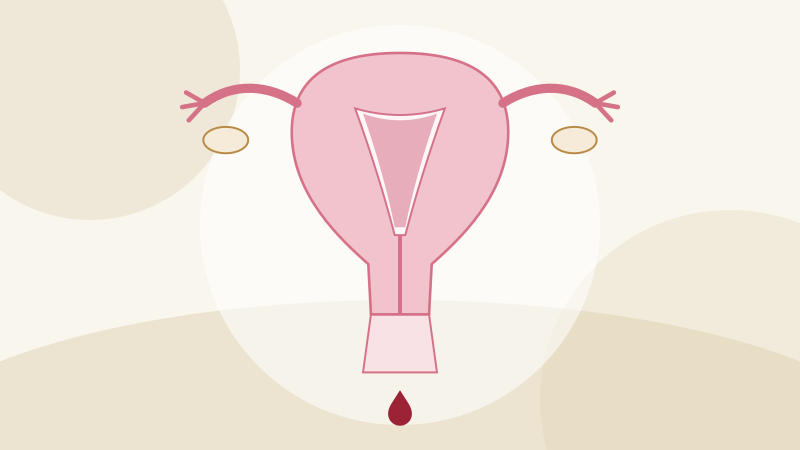
If you've had no periods for 12 months or more and then notice any bleeding at all, even a single spot or a pink discharge, it's called postmenopausal bleeding. Many women shrug it off, thinking their period has "come back". Please don't.
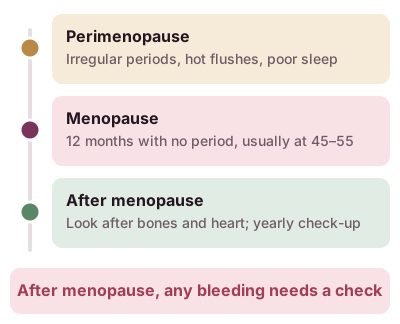
Why it needs a check
Most of the time the cause isn't serious. But in about 1 in 10 women, bleeding after menopause is the first sign of cancer of the womb lining (endometrial cancer). Found early, this cancer is usually curable. That's why every episode should be checked, ideally within 2 weeks.
Common causes
- Thinning and dryness of the vaginal walls (atrophy), the commonest cause
- Polyps in the womb or cervix
- A thickened womb lining (endometrial hyperplasia)
- HRT, especially in the first few months
- Infection
- Less often, cancer of the womb lining, cervix or ovary
What the doctor will do
- Ask about the bleeding, your medicines and any HRT
- Examine you, including looking at the cervix with a speculum
- Arrange a transvaginal ultrasound (TVS) to measure the thickness of the womb lining
- If the lining is thick, take a small sample (a biopsy), often right there in the clinic, or arrange a hysteroscopy to look inside the womb
Higher risk if you
- Are overweight
- Have diabetes or high blood pressure
- Have never had children
- Took estrogen-only HRT without a progestogen
- Have a family history of womb or bowel cancer
The one thing to remember
Bleeding after menopause is not a period. Don't feel embarrassed, and don't wait to see if it happens again. A simple check either puts your mind at rest or catches a problem early, when it's easiest to treat.