Ten years hiding "something coming down": Amena's prolapse
Amena, 60, felt a bulge in her vagina that got worse after carrying rice sacks, and hid it from her family for a decade. Pelvic organ prolapse is common, and a ring pessary or surgery can treat it.
Written by: Siratul Jannat (BMDC A-109809) · Medically reviewed by: Siratul Jannat (BMDC A-109809)
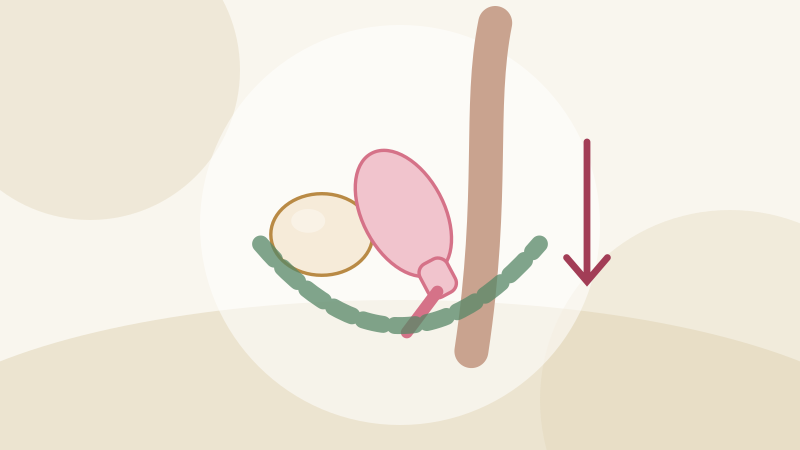
Amena had carried rice sacks and worked the fields in Gaibandha all her life, and raised seven children. For about ten years she'd felt a heaviness and dragging low in her belly, and later a soft bulge at the opening of her vagina, worse by the end of the day. Sometimes she had to push it back before she could pass urine. There was a sore on it that bled a little. She was 60, and so ashamed that she hid it even from her daughters.
It was her daughter-in-law who noticed how uncomfortably she walked, and took her to the district hospital. The diagnosis was uterine prolapse.
What prolapse is
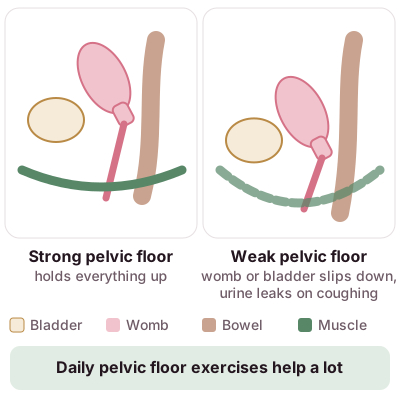
The womb, bladder and bowel are held in place by the muscles and ligaments of the pelvic floor. When these weaken, the organs can drop down into the vagina, or even out of it.
Why it happens
- Many vaginal births, long labours, and pushing before the cervix is fully open
- Heavy lifting and hard physical work, especially soon after a birth
- Menopause, which weakens the tissues
- A chronic cough, constipation and straining, being overweight
Symptoms
- Heaviness, or a feeling that "something is coming down"
- A bulge you can see or feel
- Difficulty passing urine or stool, or leaking urine
- Backache, discomfort during sex
The options
- Pelvic floor exercises, for a mild prolapse
- A ring pessary: a soft ring placed in the vagina to hold the organs up, changed or cleaned at a clinic every few months
- Surgery: a vaginal hysterectomy with repair of the vaginal walls, or other repairs that keep the womb
Because of the sore on her cervix, Amena used estrogen cream for a few weeks first to heal it. Then she chose surgery, and was told to avoid heavy lifting for three months afterwards.
Prevention
- Skilled care in labour, and no pushing before you're fully open
- Rest after a birth: no heavy lifting for at least six weeks
- Pelvic floor exercises after every birth, and for life
- Treating constipation and a chronic cough
"I thought I just had to live with it," Amena said. "Now I walk to the market without fear."
This story is illustrative. Names, places and details are made up; it is not about a real patient.