When the womb comes down (uterine prolapse): symptoms and treatment
Prolapse happens when weak pelvic muscles let the womb or bladder drop into the vagina. It's common after many births and after menopause, and exercises, a pessary or surgery can all help.
Written by: Siratul Jannat (BMDC A-109809) · Medically reviewed by: Siratul Jannat (BMDC A-109809)
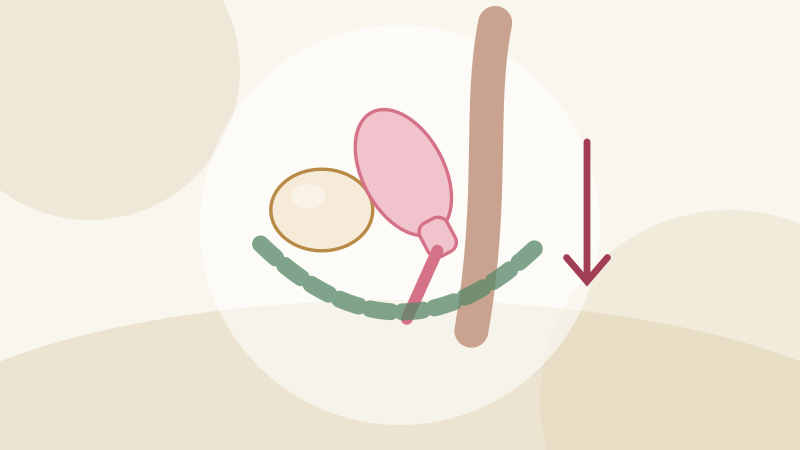
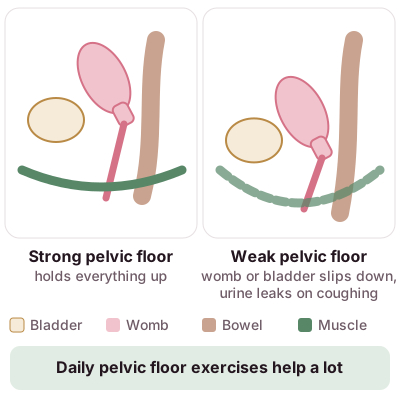
Pelvic organ prolapse means one or more of the organs in the pelvis, such as the womb, bladder or bowel, has slipped down from its normal position and bulges into the vagina. Many women in Bangladesh live with it for years in silence, believing nothing can be done. It's common, and it can be treated.
Why it happens
- Pregnancy and vaginal birth, especially many births, long labours or a big baby
- Lower estrogen after menopause
- Years of heavy lifting
- Long-term constipation and straining, or a chronic cough
- Being overweight
Symptoms
- Heaviness, or a feeling of something "coming down" in the vagina, worse at the end of the day or after standing for a long time
- A lump or bulge you can feel or see
- Trouble emptying your bladder or bowel fully; needing to push the bulge back
- Leaking urine, frequent urine infections
- Discomfort during sex, a low backache
Treatment
- Pelvic floor exercises, which help mild prolapse and stop it getting worse
- Lifestyle: treat constipation, avoid heavy lifting, lose extra weight, get a chronic cough treated
- Vaginal estrogen after menopause, to strengthen the tissues
- A pessary: a soft ring placed in the vagina to hold the organs up, changed or cleaned regularly. Useful for women who don't want, or can't have, an operation.
- Surgery to repair the support or, in some cases, remove the womb. Your doctor will talk through what's best for your age and health.
See a doctor if
You feel a bulge or heaviness, or have trouble passing urine. See a doctor urgently if the prolapse becomes ulcerated or bleeds, or you can't pass urine at all.
Prevention
Pelvic floor exercises after every birth, not straining, and spacing your pregnancies all lower the risk.