"Am I going mad?" Shamima's hot flushes, sleepless nights and short temper at 47
Shamima's periods turned irregular, she woke drenched in sweat, and she snapped at her family. She privately feared something was wrong with her mind. It was perimenopause, the years before menopause. What helps, and when to see a doctor.
Written by: Siratul Jannat (BMDC A-109809) · Medically reviewed by: Siratul Jannat (BMDC A-109809)
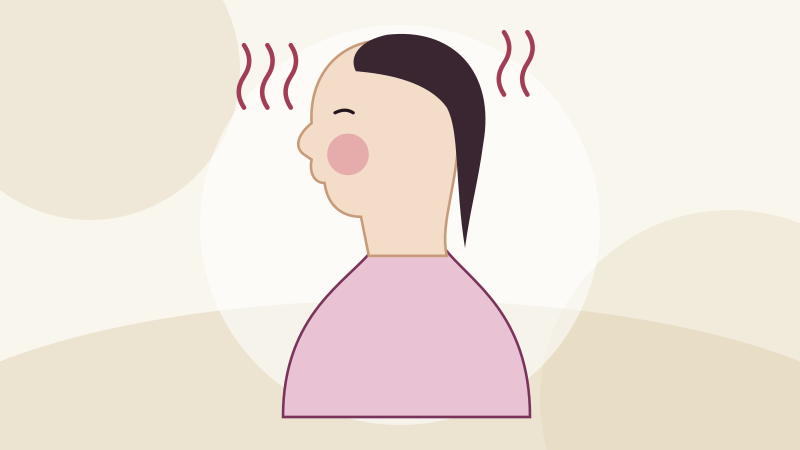
Shamima's husband joked that she'd turned "hot-tempered". She didn't laugh. Quietly, she'd started to wonder whether something was wrong with her mind.
She was 47, a bank officer in Rajshahi. Her periods had begun coming every three weeks, then skipping two months. Several times a day a wave of heat rose up into her face, often in meetings, and at night she woke soaked in sweat. She felt irritable, forgetful and tearful, and less interested in sex.
Her gynaecologist listened, then said the words Shamima needed: "This is perimenopause, the run-up to menopause. You are not going mad."
What perimenopause is
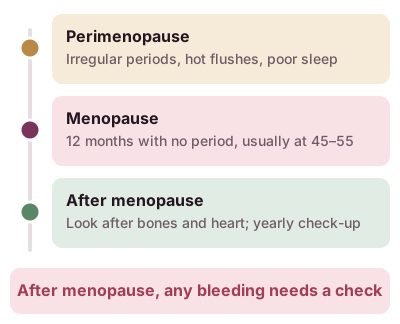
- The years before the last period, when the ovaries gradually, and unevenly, make less estrogen. It often begins in the 40s and can last several years.
- Menopause is confirmed after 12 months without a period. The average age is around 50; in Bangladesh it's often a little earlier.
- After 45 a blood test usually isn't needed; the diagnosis is made from the symptoms.
The common symptoms
- Irregular periods, sometimes heavier
- Hot flushes and night sweats
- Poor sleep, tiredness
- Mood changes, anxiety, poor concentration
- Vaginal dryness, pain during sex, more urine infections
- Aching joints
What helped Shamima
- Small changes: cotton clothes, a fan by the bed, less tea in the evening, a regular walk, and less spicy food on bad days
- Hormone replacement therapy (HRT): for most healthy women under 60, the most effective treatment for flushes, and it protects the bones too. Women who still have a womb need estrogen with a progestogen. Her doctor checked her blood pressure, her breasts, and her own and her family's history first.
- Vaginal estrogen cream for the dryness, which is very safe
- Non-hormonal options, for women who can't take HRT
- Talking: she explained to her husband what was happening, and he became much more understanding
Worth remembering
- You can still get pregnant in perimenopause. Use contraception until 12 months after your last period if you're over 50, or 2 years if you're under 50.
- Look after your bones and heart: calcium, vitamin D, exercise, and checks of blood pressure, sugar and cholesterol.
See a doctor if
- Bleeding is very heavy, happens after sex or between periods, or periods come closer than every 3 weeks
- You have any bleeding after 12 months without a period
- The symptoms are affecting your work, your sleep or your relationships
This story is illustrative. Names, places and details are made up; it is not about a real patient.