Bleeding in early pregnancy: does it mean a miscarriage?
Bleeding in the first 12 weeks is common, and many pregnancies carry on perfectly normally. But it always needs checking, because it can be a sign of miscarriage or an ectopic pregnancy.
Written by: Siratul Jannat (BMDC A-109809) · Medically reviewed by: Siratul Jannat (BMDC A-109809)
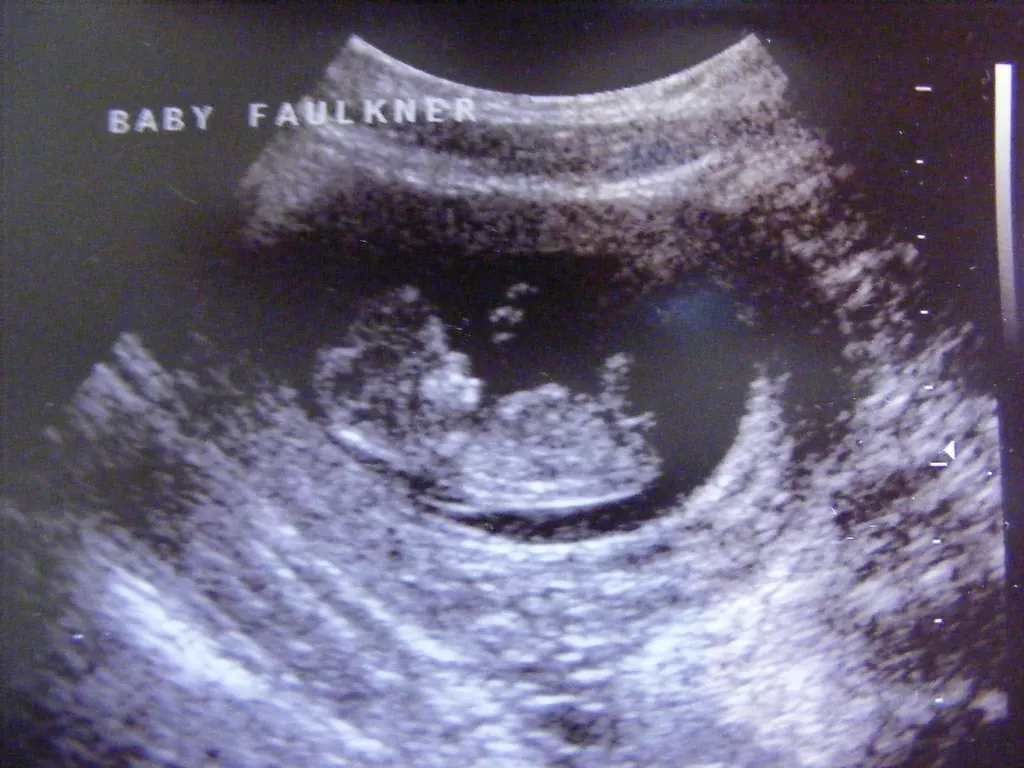
Bleeding or spotting in the first three months is frightening. It's also common, and many women who bleed go on to have a healthy baby. Even so, any bleeding in pregnancy should be seen by a doctor, because the cause matters.
Possible causes
- Light bleeding as the pregnancy settles into the womb
- The cervix, which bleeds more easily in pregnancy, for example after sex
- Infection
- Threatened miscarriage: bleeding while the pregnancy is still continuing
- Miscarriage
- Ectopic pregnancy: a pregnancy outside the womb
- Rarely, a molar pregnancy
Signs of a miscarriage
- Bleeding that gets heavier, often with clots or tissue
- Cramping pain in the lower belly or back
- Pregnancy symptoms such as nausea and sore breasts suddenly fading
Go to hospital straight away if
- The bleeding is heavy, soaking a pad an hour
- The pain is severe, especially on one side, or you have pain at the tip of the shoulder
- You feel dizzy or faint, or your heart is racing
- You have a fever or a bad-smelling discharge
What the doctor will do
An ultrasound, often a TVS, shows whether the pregnancy is in the womb and whether there's a heartbeat. Sometimes blood beta hCG is measured twice, 48 hours apart, to see how the pregnancy is progressing. Your blood group will be checked; if you're Rh negative you may need an anti-D injection.
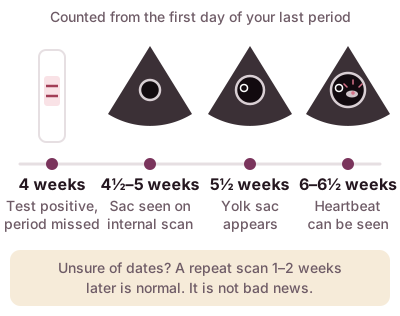
Seeing nothing on a very early scan is not necessarily bad news. On an internal scan, the pregnancy sac usually shows at four and a half to five weeks, the yolk sac at five and a half weeks, and the heartbeat at six to six and a half weeks. So if the dates are uncertain, the doctor will often repeat the scan in one to two weeks. In a pregnancy that is progressing, beta hCG usually rises by at least a third in 48 hours, and that is what the doctor looks for when comparing the two results.
If a miscarriage happens
Most early miscarriages happen because of a chance problem in the baby's chromosomes. They are not caused by working, lifting, travelling, sex, stress or anything you ate. It is not your fault. Depending on the situation, the doctor may wait for it to complete naturally, give medicine, or do a small procedure. Give yourself time to rest and to grieve. Most women who miscarry go on to have healthy pregnancies.
Afterwards
Get help if you develop a fever, heavy bleeding or pain. Talk to your doctor about when to try again, and if you've had two or three miscarriages, ask about tests.