Copper-T and the implant: long-term family planning, explained
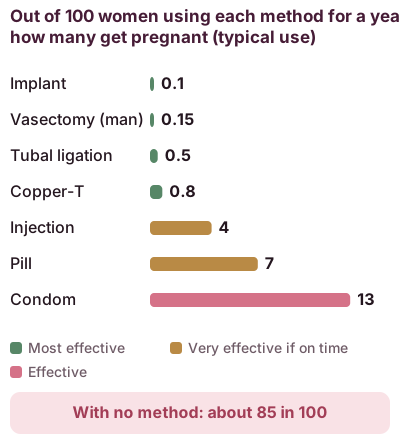
The Copper-T and the implant are over 99 percent effective, last for years, and can be removed whenever you like. Fertility comes back quickly afterwards. Changes to your periods are the main side effect.
Written by: Siratul Jannat (BMDC A-109809) · Medically reviewed by: Siratul Jannat (BMDC A-109809)
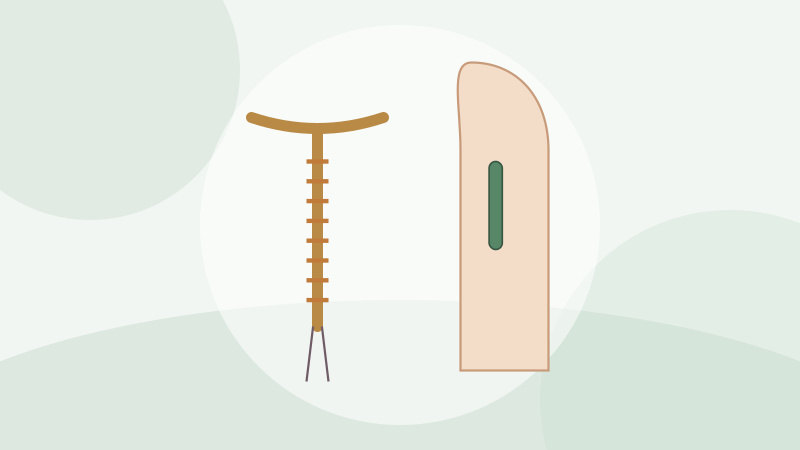
Long-acting reversible methods are the most effective temporary contraception there is. Once fitted, there's nothing to remember every day or every month. Both are free at government family welfare centres.
Copper-T (IUD)
- A small T-shaped device placed inside the womb by a trained provider; it takes a few minutes
- Lasts up to 10 years, depending on the type
- No hormones; fine while breastfeeding
- Can be fitted soon after a birth, at the 6-week check, or any time you're sure you're not pregnant
- Can also be used as emergency contraception within 5 days of unprotected sex
Side effects: periods may get heavier, longer or more painful, especially for the first 3 to 6 months. Some cramping after it's fitted is common.
Implant
- A thin, bendy rod about the size of a matchstick, placed under the skin of the inner upper arm with a local anaesthetic
- Lasts 3 to 5 years, depending on the type
- Fine while breastfeeding
Side effects: irregular bleeding is common; periods may become lighter, more frequent, or stop. Some women get headaches or acne.
Checking your Copper-T
You'll usually be checked after your first period following the fitting. If you like, you can feel for the threads high in the vagina after each period. See a provider if you can't feel them, or if you can feel the hard part of the device.
Myths
- "The Copper-T can travel to the heart or stomach." It can't. Occasionally it shifts within the pelvis or comes out, which is why checks are advised.
- "My husband will feel it." Usually not, and if he does, the threads can be trimmed.
- "It causes infertility or cancer." No. Fertility comes back soon after removal.
See a doctor if
- You have severe pain low in the belly, a fever or a bad-smelling discharge
- You miss a period, or get a positive pregnancy test
- The bleeding is very heavy
- There's pain or a change at the implant site that doesn't settle