Diabetes in pregnancy (gestational diabetes): the test, the food, and a safe delivery
Gestational diabetes is high blood sugar that starts in pregnancy, and it's common in South Asian women. An OGTT at around 24 to 28 weeks finds it; food, activity and sometimes insulin keep mother and baby safe.
Written by: Siratul Jannat (BMDC A-109809) · Medically reviewed by: Siratul Jannat (BMDC A-109809)
Gestational diabetes is high blood sugar that develops during pregnancy, because pregnancy hormones make the body respond less well to insulin. South Asian women, Bangladeshi women included, are at higher risk than many other groups.
Why it matters
Extra sugar crosses to the baby, who may grow very large, which makes the birth harder. It also raises the risk of pre-eclampsia, early birth and low blood sugar in the newborn. With good control, most women have healthy babies.
Who should be tested
Many doctors in Bangladesh test every pregnant woman. You're at higher risk if you:
- Are overweight
- Had gestational diabetes before, or a baby over 4 kg
- Have a parent, brother or sister with diabetes
- Have PCOS
- Are over 30
The test: an OGTT
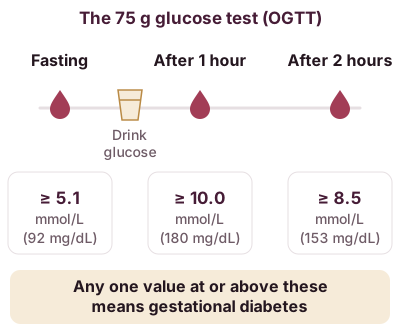
The oral glucose tolerance test is usually done at 24 to 28 weeks, or earlier if you're at high risk. You come in fasting in the morning, give a blood sample, drink a glucose solution, and give more samples after 1 and 2 hours.
By the World Health Organization's cut-offs, a result of 5.1 mmol/L or more fasting, 10.0 or more at 1 hour, or 8.5 or more at 2 hours means gestational diabetes; any one is enough. Don't eat for at least 8 hours before the test, though water is fine, and stay seated for the two hours, since walking about can make the result wrong.
Keeping it under control
- Food: regular, moderate meals; less sugar, sweets and sweet drinks; smaller amounts of white rice, mixed with dal and vegetables; brown rice or atta roti; a little whole fruit rather than juice.
- Activity: a 15 to 30 minute walk after meals brings sugar down nicely.
- Checking your sugar: your doctor may ask you to check at home with a glucometer.
- Medicine: if your sugar stays high, insulin or tablets are started. Insulin is safe for the baby, and you don't get addicted to it.
The birth
Most women with well-controlled gestational diabetes can have a normal delivery. Your doctor may advise birth at around 39 to 40 weeks, or earlier if there are concerns. The baby's sugar is checked after birth; breastfeeding early helps.
Afterwards
It usually goes away after delivery, but your chance of type 2 diabetes later in life is high. Have a blood sugar test 6 to 12 weeks after the birth, and then every year, and keep up the healthy eating and activity.