"The baby isn’t growing": Shahnaz’s 32-week scan and the six weeks after
At a check-up, her bump measured small, so the doctor arranged a scan. The baby was smaller than expected for its age: growth restriction. Then came Doppler scans, counting the baby's movements, and working out when it would be safest for the baby to be born.
Written by: Siratul Jannat (BMDC A-109809) · Medically reviewed by: Siratul Jannat (BMDC A-109809)
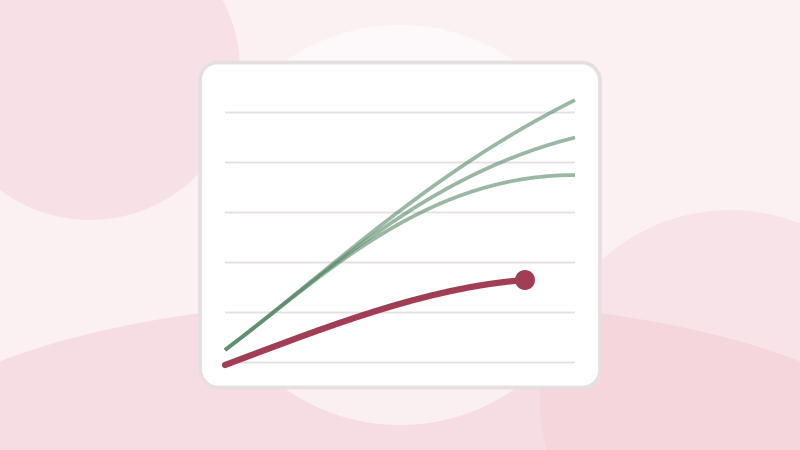
Shahnaz, 28, from Chandpur, was in her second pregnancy, which came a year and a half after her son was born. Housework, a toddler, and nausea on top; she wasn't eating much. At her 32-week check-up the doctor measured her bump with a tape, then measured again. It was 28 cm; at 32 weeks it should be close to 32.
What the scan showed
The ultrasound put the baby's estimated weight at 1.4 kg, among the smallest 5 out of 100 babies at that stage. The fluid was a little low. The doctor said the baby's growth had fallen behind (fetal growth restriction, often called IUGR).
Shahnaz's first question was, "Is it because I didn't eat enough?" The doctor said food can be one reason but rarely the only one, and that getting the baby born safely mattered more now than finding someone to blame.
Why a baby stops growing well
- The placenta not working well: the commonest reason. The baby gets less food and oxygen.
- The mother's high blood pressure or pre-eclampsia, or kidney disease
- Poor nutrition, anaemia or very low weight in the mother, and pregnancies close together
- Smoking, and chewing zarda or gul
- Some infections, and chromosome or structural problems in the baby
- Twins
Shahnaz's blood pressure was normal and there was no protein in her urine. Her haemoglobin was 9. A short gap between pregnancies, eating too little and anaemia were the likely causes.
Doppler: how well the baby is coping
When a baby is small, the most useful test is a Doppler scan of the blood vessels in the cord. It shows how easily blood is flowing through to the placenta.
- If the flow is normal, the pregnancy can usually continue with checks every week or two.
- If the flow is reduced, stops or reverses, the baby is in danger and may need to be delivered much earlier.
Shahnaz's Doppler showed slightly reduced flow, but it hadn't stopped.
The next six weeks
- Hospital twice a week: a CTG (a recording of the baby's heartbeat), her blood pressure, a Doppler every week, and a growth scan every two weeks.
- Paying attention to the baby's movements every day. If they slowed down, hospital the same day, not at the next appointment.
- Carrying on with iron, an extra meal a day, and rest. Her sister-in-law took over looking after her son.
- Because the baby might need to be born before 34 weeks, Shahnaz had steroid injections over two days to help the baby's lungs mature.
Shahnaz said nobody had ever spoken to her about rest and food like that before. Her husband took half a day off work every week to take her to the hospital.
The birth
A small baby doesn't always mean a caesarean. If the Doppler stays reasonable, labour can often be induced at 37 to 38 weeks for a vaginal birth, with the baby's heartbeat monitored continuously. Shahnaz was admitted at 37 weeks, labour was started, and that evening her daughter was born by normal delivery, weighing 2.1 kg.
A small baby needs extra care in the first days: keeping warm (skin to skin on the mother's chest is best), frequent breastfeeds, and checks that the blood sugar doesn't drop. Shahnaz's daughter went home after three days.
For the next pregnancy
- At least two years before the next baby, and anaemia treated before getting pregnant.
- After a small baby, growth scans from early in the next pregnancy; for some women the doctor gives low-dose aspirin.
If your baby is thought to be small
- Pay attention to the baby's movements every day; if they decrease, go to hospital that day.
- Don't wait with a severe headache, blurred vision, your waters breaking or bleeding.
- Go every time the doctor asks; each check tells you the baby is coping.
This story is illustrative. Names, places and details are made up; it is not about a real patient.