"Should I have the NT scan?" Moushumi's questions about Down syndrome screening
At 38, Moushumi wanted to understand her options. A screening test gives a chance, not an answer. How the NT scan, blood tests and diagnostic tests work, and how to decide what's right for you.
Written by: Siratul Jannat (BMDC A-109809) · Medically reviewed by: Siratul Jannat (BMDC A-109809)
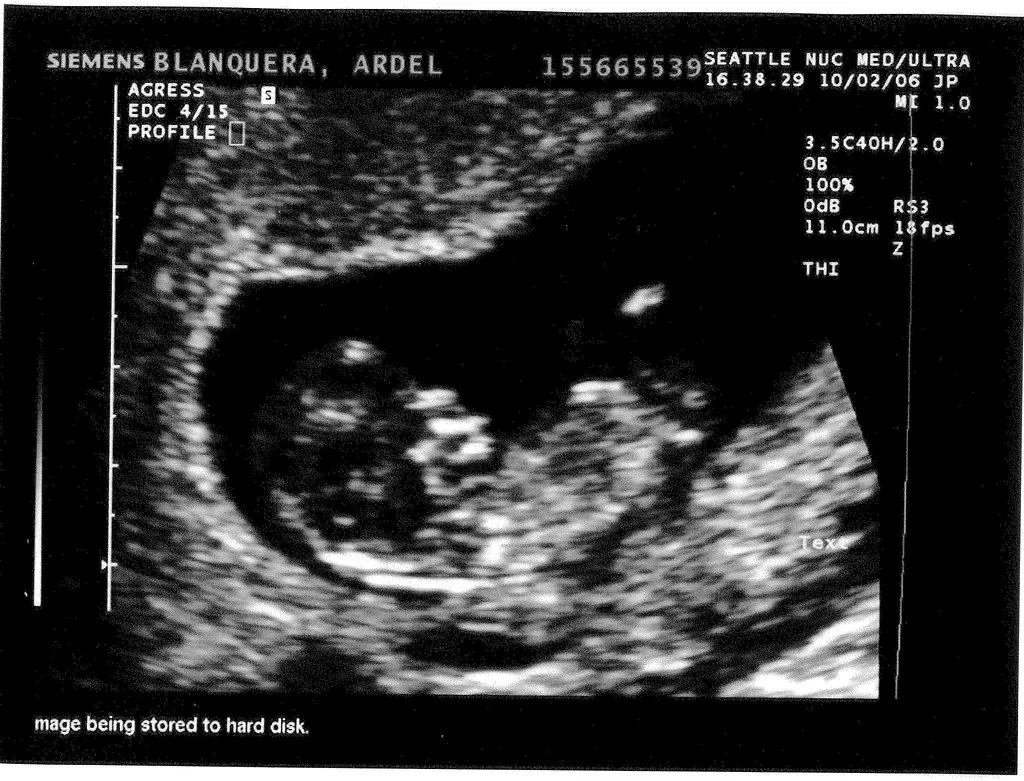
Moushumi came to her 11-week visit with a list. She was 38, a banker in Dhaka, pregnant for the second time, and a colleague had mentioned that the chance of Down syndrome goes up with the mother's age. Since then she'd been reading, and worrying.
Her first question was the right one: "What's the difference between all these tests?"
Screening and diagnosis aren't the same
- Screening tests don't harm the baby. They estimate the chance that the baby has Down syndrome or certain other chromosome conditions. They can't say yes or no.
- Diagnostic tests give a definite answer, but they involve taking a small sample from around the baby, with a small risk of miscarriage.
The screening options
- The nuchal translucency (NT) scan, at 11 to 14 weeks, measures fluid at the back of the baby's neck. Combined with a blood test from the mother, it gives a risk estimate. It has to be done by a trained sonologist at the right time.
- Second-trimester blood tests (such as the quadruple test), at 15 to 20 weeks, if the early window has passed.
- Cell-free DNA (NIPT): a blood test that analyses the baby's DNA in the mother's blood. Very accurate as a screen, available through some private labs, but expensive.
- The anomaly scan at 18 to 22 weeks checks the baby's organs and can show some signs too.
If the result shows a high chance
A high-chance result doesn't mean the baby definitely has Down syndrome; most women with one go on to have a baby without it. You'd be offered counselling and a diagnostic test: chorionic villus sampling (CVS) at 11 to 14 weeks, or amniocentesis from 15 weeks, available at some specialist centres in Dhaka. At every step, the decision is yours.
How Moushumi decided
She and her husband talked through what they'd do with each possible result before they did anything. They chose the NT scan with a blood test, and it showed a low chance. "Once I understood that screening only gives a chance, not a final answer, I was so much calmer," she said. "And I knew the choice at every step was ours."
Worth remembering
- Screening is a choice, not a requirement; some families prefer not to test
- Ask for your result as a number (for example, 1 in 2,000), and what it means
- Children with Down syndrome can live happy, loving lives, and there are support services in Bangladesh
This story is illustrative. Names, places and details are made up; it is not about a real patient.