A little burning she ignored for days, then a high fever at 24 weeks
Nazma put up with mild burning when passing urine for several days. Then came high fever, shivering and pain in her side: a kidney infection, which in pregnancy needs hospital treatment. Why urine infections in pregnancy should always be treated early.
Written by: Siratul Jannat (BMDC A-109809) · Medically reviewed by: Siratul Jannat (BMDC A-109809)
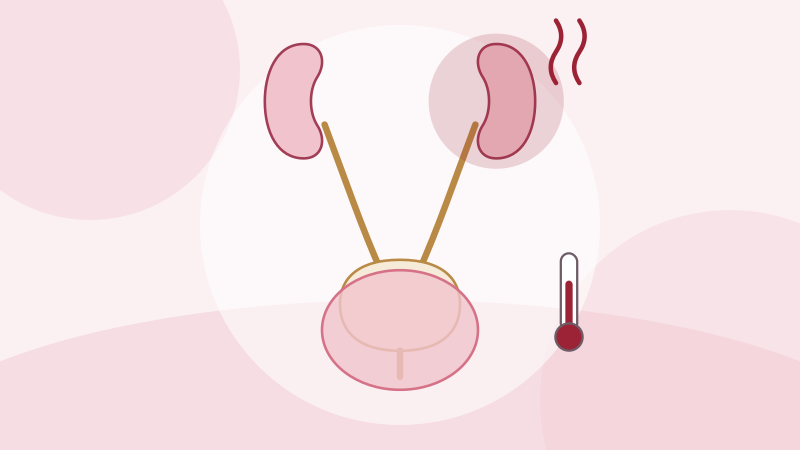
Nazma, 24, from Lalmonirhat, was 24 weeks pregnant. For a few days she'd had mild burning when she passed urine, but she assumed that was just pregnancy. Then one evening she developed a high fever with shaking chills, started vomiting, and felt a deep pain in her right side and back. Her husband took her to the district hospital.
Her urine test showed infection, and when the doctor gently tapped over her right kidney, it was very tender. The diagnosis was pyelonephritis: the infection had climbed from the bladder up to the kidney.
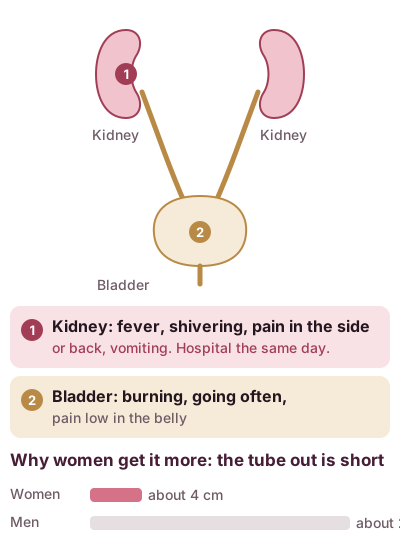
Why pregnancy makes this more likely
- Pregnancy hormones relax the tubes from the kidneys to the bladder, and the growing womb presses on them, so urine flows more slowly.
- That makes it easier for bacteria to travel up to the kidney.
- Some pregnant women have bacteria in their urine with no symptoms at all, and if that isn't treated it can lead to a kidney infection.
Why it's serious
A kidney infection in pregnancy can cause sepsis (a severe, whole-body reaction), breathing problems and early labour. That's why it's treated in hospital.
Her treatment
- Antibiotics through a drip, chosen to be safe in pregnancy, and fluids
- A urine culture to confirm the right antibiotic
- Close checks of her temperature, blood pressure, breathing and the baby's heartbeat
- Once the fever had stayed down for 24 to 48 hours, tablets to finish the course at home
- A repeat urine test afterwards, and checks for the rest of the pregnancy
Prevention
- Have the routine urine test (culture) at your first antenatal visit
- Mention burning or needing to go often in pregnancy, rather than waiting
- Drink plenty of water, and don't hold on
If you're pregnant, go to hospital if you have
- Fever or shivering
- Pain in your side or back
- Vomiting, or feeling very unwell
- Regular tightenings of your belly
This story is illustrative. Names, places and details are made up; it is not about a real patient.