It didn't hurt, so Rahima waited eight months
Rahima, 48, found a hard, painless lump and put a kabiraj's paste on it for eight months. It was breast cancer. Caught early, breast cancer is often curable. The warning signs, and why pain is no guide.
Written by: Siratul Jannat (BMDC A-109809) · Medically reviewed by: Siratul Jannat (BMDC A-109809)
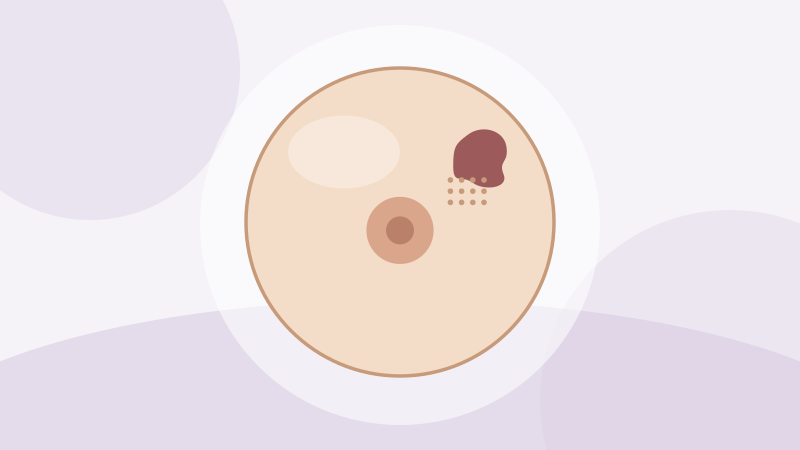
The lump in Rahima's right breast was hard, but it didn't hurt, so she didn't think it could be serious. She was 48, from Naogaon. A kabiraj gave her a herbal paste to put on it.
Eight months later the lump had grown. The skin over it looked like orange peel, her nipple had pulled inwards, and there was a new lump in her armpit.
At the medical college hospital, the breast surgeon examined her, arranged a mammogram and ultrasound, and took a core needle biopsy. It was breast cancer, and it had spread to the lymph nodes in her armpit.
Why pain is no guide
Most breast cancers are painless at first, so waiting for pain means waiting too long. Herbal pastes, heat or massage don't treat a breast lump; they just delay the diagnosis.
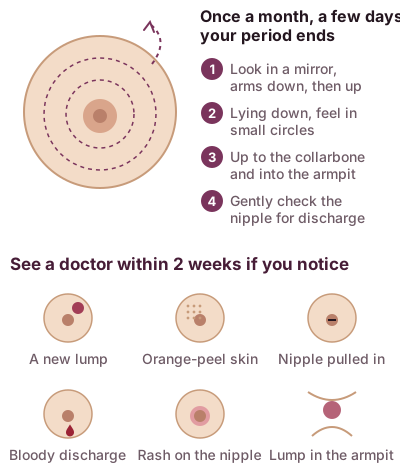
The warning signs
- A new lump or thickening in the breast or armpit, often hard and irregular
- A change in the size or shape of the breast
- Dimpling or puckering of the skin, orange-peel skin, redness
- A nipple that turns inwards, a rash on the nipple, or bloody discharge
- A sore on the breast that won't heal
Her treatment
Rahima's team included a breast surgeon, an oncologist and a radiotherapist. She had chemotherapy first to shrink the tumour, then surgery, then radiotherapy and hormone tablets, because her cancer was hormone-sensitive. It was long and hard, but she finished it, with her daughters beside her, and she's now under regular follow-up.
Finding it early changes everything
When breast cancer is found while it's small and still confined to the breast, the chance of cure is very high. In Bangladesh many women are diagnosed late, held back by fear, shame and delay.
What every woman can do
- Know how your breasts normally look and feel, and check every month
- Have a breast examination at a health facility, especially from 40
- Ask about mammography from around 40 to 50 if it's available, and earlier with a strong family history
- Any new lump: see a doctor within two weeks, not months
This story is illustrative. Names, places and details are made up; it is not about a real patient.