A smooth lump that slipped away under her fingers
Tasnim, 21, found a firm, rubbery lump in her breast and was too frightened to tell her parents. It was a fibroadenoma, the commonest breast lump in young women. How a lump is checked, and why every new one deserves a visit.
Written by: Siratul Jannat (BMDC A-109809) · Medically reviewed by: Siratul Jannat (BMDC A-109809)
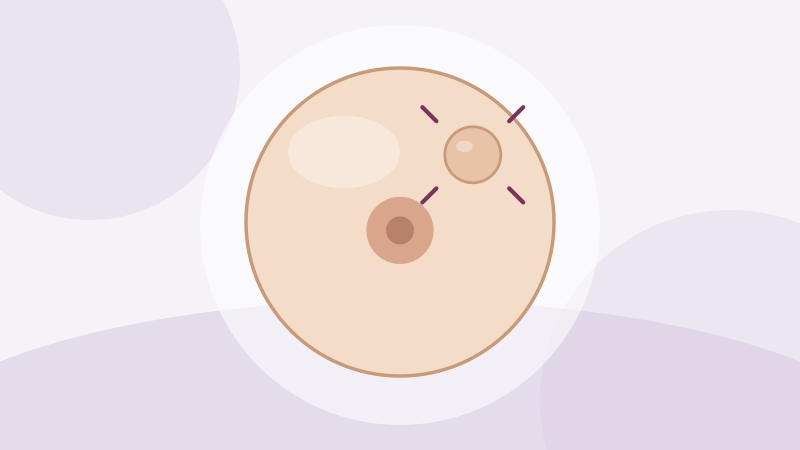
Tasnim found it in the shower: a lump in her left breast, about 2 cm across, smooth, firm and rubbery, that slid away under her fingers. It didn't hurt. She was 21, at university in Sylhet, and she spent the next two weeks reading about breast cancer online and unable to concentrate on anything. Finally she told her elder sister, who took her to a breast clinic.
How the lump was checked
The doctor used what's called triple assessment:
- Examination by a trained doctor (you can ask for a female doctor, or a chaperone)
- Imaging: an ultrasound, which is best for young women; mammograms are used more over about 35 to 40
- A needle biopsy, if the scan or examination isn't clearly benign
Tasnim's ultrasound showed the classic look of a fibroadenoma, and a small needle biopsy confirmed it.
What a fibroadenoma is
- A non-cancerous lump made of breast gland and connective tissue
- The most common breast lump in women aged 15 to 35
- Often called a "breast mouse", because it moves under your fingers
- In the vast majority of cases it never turns into cancer
- It may stay the same, shrink, or grow a little, especially in pregnancy
Treatment
Most fibroadenomas don't need removing. Tasnim was told to come back if it grew or changed. Removal is considered if a lump is large (over about 3 to 5 cm), growing or painful, or if the woman would simply rather have it out.
Every new lump should still be checked
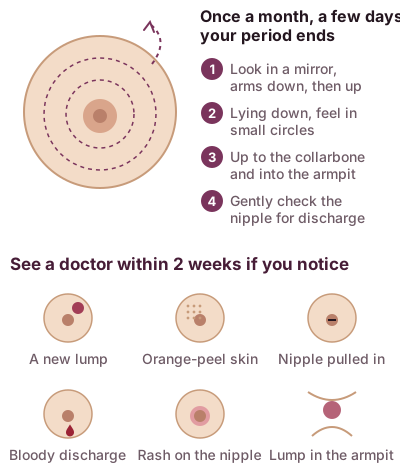
Most breast lumps in young women are benign, but a doctor needs to examine any new lump, especially one that:
- Is hard, fixed or irregular
- Comes with dimpling of the skin, redness, a pulled-in nipple or bloody discharge
- Comes with a lump in the armpit
- Appears after 35, or when there's a strong family history of breast cancer
Get to know your breasts
Look and feel regularly so you'll notice changes. The best time is a few days after your period ends, when breasts are least lumpy.
This story is illustrative. Names, places and details are made up; it is not about a real patient.