Halfway up the stairs, her belly turned hard as stone
At 35 weeks, Mitu had sudden constant pain, a rock-hard womb and some dark bleeding. Her placenta had begun to separate. Why this is an emergency for mother and baby, and who is most at risk.
Written by: Siratul Jannat (BMDC A-109809) · Medically reviewed by: Siratul Jannat (BMDC A-109809)
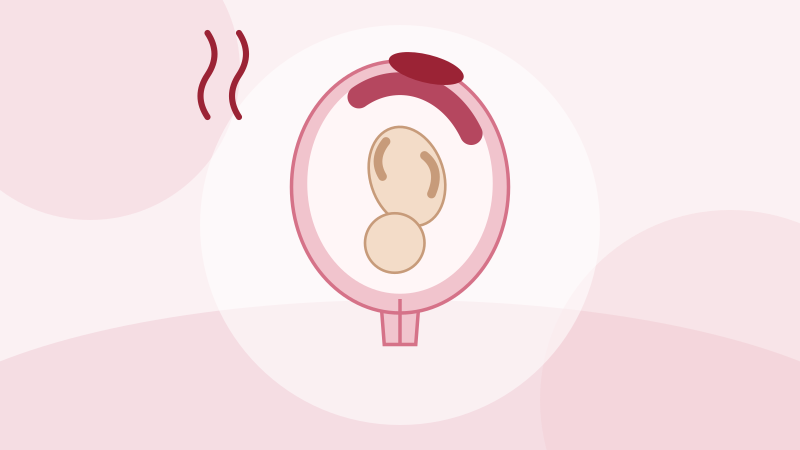
Mitu was halfway up the stairs to her rented room in Gazipur when the pain hit. She was 28, a garment worker, 35 weeks pregnant, and she'd had high blood pressure all through the pregnancy, though long shifts meant she'd missed a lot of check-ups. This pain was different from anything she'd felt. It didn't come and go like labour; it stayed. Her belly felt hard as stone. There was dark blood on her clothes, and she realised the baby had gone quiet.
Her neighbour rang 999.
In the hospital
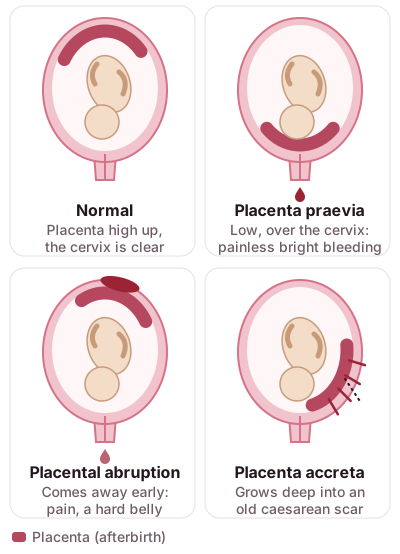
Her blood pressure was high, the womb was tense and tender, and the baby's heartbeat was slowing. Within the hour she was in theatre for an emergency caesarean, and the surgeons found a large clot behind the placenta. It was a placental abruption: the placenta had started peeling away from the wall of the womb before the baby was born.
Blood collects behind the placenta, and much of it can stay hidden inside, so the amount you see can be small even when things are serious. The baby loses its oxygen supply, and the mother can lose a great deal of blood and develop problems with clotting.
Who is more at risk
- High blood pressure or pre-eclampsia
- A previous abruption
- A fall or a blow to the belly, including violence at home
- Smoking or tobacco, including zarda and sadapata
- Waters breaking early, twins, or too much fluid around the baby
The warning signs
- Sudden belly or back pain that stays, rather than coming in waves
- A belly that feels hard and tender
- Vaginal bleeding, sometimes dark, sometimes little or none
- The baby moving less
- Feeling faint, weak or pale
Any one of these means hospital, now. Don't wait for the bleeding to get worse.
Afterwards
Mitu needed a blood transfusion and a week in hospital. Her son spent a few days in the newborn unit and went home healthy. Before she left, her doctor helped her arrange blood pressure checks near the factory. "I used to think a check-up was a day's wages wasted," Mitu said. "Now I know that's how they catch the pressure before it does something like this."
If you have high blood pressure in pregnancy, keep every appointment and take your medicine. And if anyone at home is hurting you, violence in pregnancy endangers the baby too; help is available on 109.
This story is illustrative. Names, places and details are made up; it is not about a real patient.