Three caesareans, a fourth pregnancy, and why Nasrin couldn't deliver at her usual clinic
Nasrin's scan showed her placenta growing deep into an old caesarean scar (placenta accreta). Planning the birth in a big hospital, with blood ready, saved her life. What every woman with previous caesareans should know.
Written by: Siratul Jannat (BMDC A-109809) · Medically reviewed by: Siratul Jannat (BMDC A-109809)
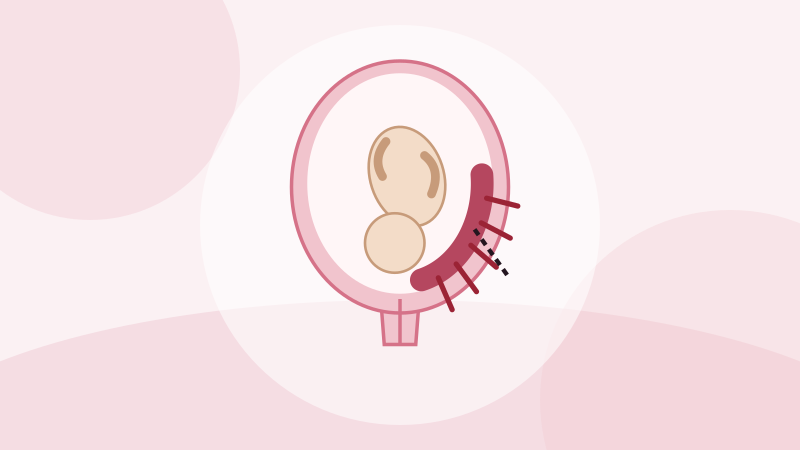
Nasrin was annoyed at first. She was 35, from Narsingdi, and her three children had all been born by caesarean at the same small private clinic. She'd planned to go there again for her fourth.
Then, at her 28-week scan, the sonologist noticed the placenta was lying low, right over the old caesarean scar, and that the clear line that should separate the placenta from the wall of the womb was missing. She was referred to a medical college hospital, where a specialist scan confirmed it: placenta accreta.
What that means
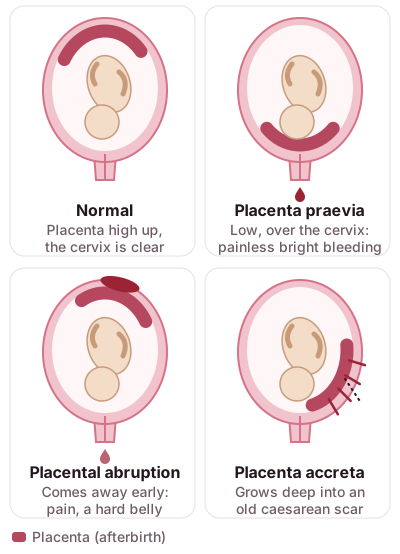
Normally the placenta attaches to the inner lining of the womb and peels away easily after the birth. In accreta it grows too deeply into the wall, sometimes right through it. After the baby is born it won't separate, and trying to remove it can cause massive bleeding.
Each caesarean leaves a scar, and the risk of accreta goes up with every one, especially when the placenta lies low over the scar (placenta previa). It's one of the reasons that avoiding a caesarean that isn't medically needed protects a woman's future pregnancies.
The plan that kept her safe
- Delivery planned for around 35 to 36 weeks in a tertiary hospital, before labour could start
- A team with an experienced obstetrician, an anaesthetist and, if needed, a urologist
- Several units of blood arranged in advance, with a blood bank on site
- The family told beforehand that removing the womb (a hysterectomy) might be needed to stop the bleeding
- Steroid injections for the baby's lungs
On the planned day, her son was born by caesarean. As expected, the placenta didn't separate, and the team removed the womb with the placenta still in place. Nasrin was given blood, spent a day in intensive care, and went home a week later with her baby.
If you've had a caesarean before
- Tell every doctor and sonologist in your next pregnancy
- Ask whether the placenta is low, and where it sits in relation to the scar
- If you have placenta previa over a scar, don't plan to deliver at a small clinic
- Any bleeding in pregnancy: hospital, straight away
"I was angry that I couldn't give birth where I wanted," Nasrin said later. "Now I understand. A planned operation in the right place saved my life."
This story is illustrative. Names, places and details are made up; it is not about a real patient.