Two months of iron tablets, and her haemoglobin wouldn't budge
Farzana took every tablet and still stayed anaemic. A simple test showed why: she carries thalassaemia, as roughly 1 in 10 Bangladeshis do. Why the husband needs testing too, and why couples should know before or early in pregnancy.
Written by: Siratul Jannat (BMDC A-109809) · Medically reviewed by: Siratul Jannat (BMDC A-109809)
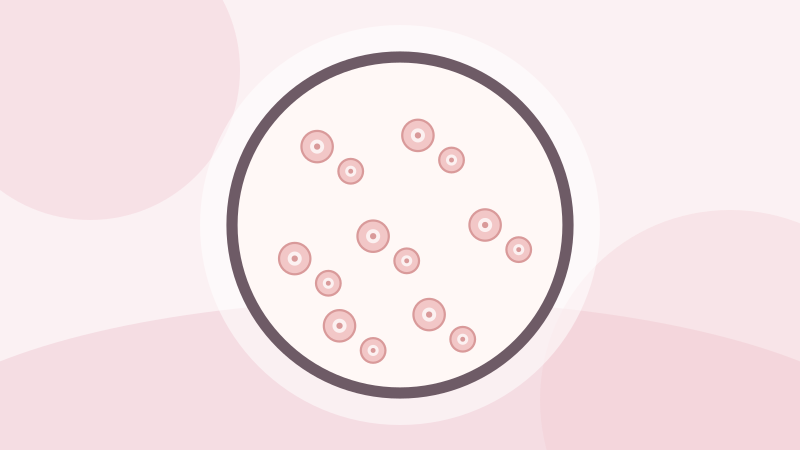
Farzana was close to tears when she handed over her second blood report. "I haven't missed a single tablet," she said. She was 25, a schoolteacher in Khulna, and at her first antenatal visit her haemoglobin had been low. Two months of iron later, it had barely moved, and she'd started to feel it was somehow her fault.
It wasn't. Her doctor looked again at the report: the red blood cells were very small, smaller than iron shortage alone would explain. That pointed somewhere else, so she ordered an Hb electrophoresis test. It showed she was a carrier of beta thalassaemia (thalassaemia trait, or minor).
What being a carrier means
- Thalassaemia is an inherited condition that affects how the body makes haemoglobin. Carriers are usually healthy, but can have a mild anaemia that iron doesn't fix.
- Thalassaemia and haemoglobin E traits are common in Bangladesh: roughly 1 in 10 people carry one of these genes, and most never know.
- Being a carrier isn't a disease, and it doesn't get worse with time.
Why Rakib needed a test too
This is the part that matters most for the baby. If both parents are carriers, each pregnancy has a 1 in 4 chance of the baby having a serious form of thalassaemia, needing regular blood transfusions for life. If only one parent carries it, the baby can't have the serious form, though it might be a carrier too.
Her husband Rakib was tested that same week. His result was normal, and the relief on both their faces said everything: their baby couldn't have thalassaemia major.
And if both of you are carriers
Couples are offered counselling, and testing the baby during pregnancy (by chorionic villus sampling or amniocentesis) is available at some specialist centres in Dhaka, so parents can decide with full information. The earlier you know, the more choices you have.
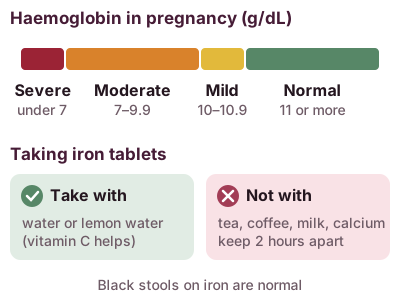
Looking after a carrier's anaemia
- Give iron only if iron really is low, which a ferritin test shows; extra iron doesn't help a carrier
- Folic acid matters even more
- Haemoglobin is watched through the pregnancy
These days Farzana talks to her students' parents about thalassaemia screening. "One simple blood test before marriage, or before a pregnancy, can save a family a lifetime of suffering," she says. More and more couples in Bangladesh are testing before marriage, especially when it runs in the family. If your anaemia isn't improving on iron, ask for more tests, not just more tablets.
This story is illustrative. Names, places and details are made up; it is not about a real patient.