Her waters broke and she waited for labour. Two days later she had a fever
Bilkis's waters broke at 37 weeks, but no contractions came, so she stayed home. Two days later she had a fever and the fluid smelled bad: an infection around the baby. When to go to hospital after your waters break.
Written by: Siratul Jannat (BMDC A-109809) · Medically reviewed by: Siratul Jannat (BMDC A-109809)
"The pains will come by themselves," an elder in Bilkis's family told her. "There's no need to rush."
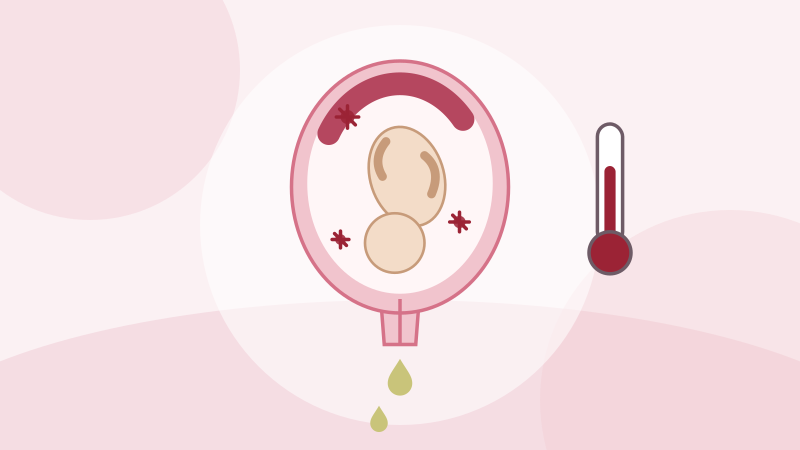
Bilkis, 25, from Satkhira, had felt a sudden trickle of clear fluid at 37 weeks. There was no pain, so she waited at home. Two days later there were still no contractions. Instead she developed a fever and the shivers, the fluid turned yellowish and began to smell bad, and her belly was tender.
At the district hospital her temperature was high and the baby's heart rate was fast. She had chorioamnionitis (intra-amniotic infection): an infection of the fluid and membranes around the baby.
Why it happened
The bag of waters protects the baby from germs. Once it breaks, bacteria from the vagina can travel up into the womb, and the longer the gap between the waters breaking and the birth, the more likely that becomes, especially with lots of internal examinations.
Treatment
Bilkis was started on antibiotics through a drip straight away, and labour was brought on with medicine. Her son was born normally a few hours later. The newborn team checked him and gave him antibiotics for a few days too. Both of them recovered well.
When your waters break
- Go to hospital, even if there's no pain. The team will check that it really is your waters, and look at the baby's position, heartbeat and the colour of the fluid.
- At term, if labour doesn't start within about 24 hours, starting it with medicine is usually advised, to lower the risk of infection.
- Before 37 weeks, the team may give antibiotics and steroids and watch you closely.
- Use pads, not cloth pushed inside. Avoid sex, and avoid bathing in ponds or tubs.
Go immediately if
- The fluid is green, brown, bloody or smells bad
- You have a fever, shivers or a tender belly
- The baby is moving less
- You can feel the cord, or something else, in the vagina
This story is illustrative. Names, places and details are made up; it is not about a real patient.